
Reviewed · HALEAKALA SUNRISE & SUMMIT TOURS
Haleakala Crater Hiking Experience
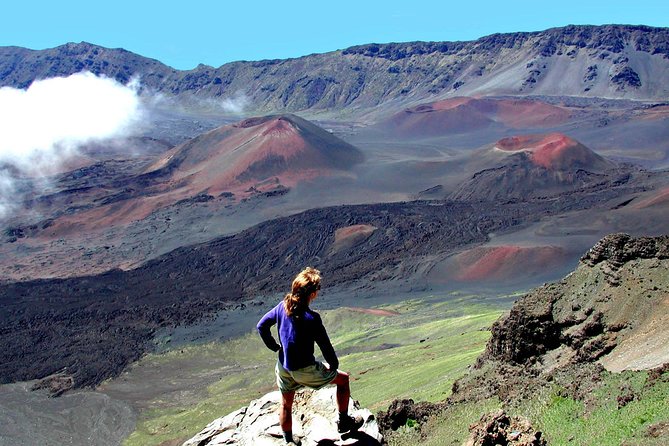
Haleakala Crater is the sort of place that makes ordinary hiking feel slightly unreal. At about 8,000 feet, you walk across thin, lava-strewn trails, then climb toward the 10,000-foot summit among multicolored cinder cones. The crater is quiet, stark, and sacred to Native Hawaiians, with rare plants and endangered birds adding meaning to the scenery.
I like the small group size, which allows guides such as Joel and Marko to give personal attention and help with photographs. I also like that lunch and snacks are included, a practical touch on a high-altitude hike where you need steady energy.
The main consideration is the effort. This is a moderately difficult 4-mile hike, and one detailed account found the pace fairly demanding. The excursion also operates in all weather, so clouds, wind, or poor conditions can affect the day.
In This Review
- Key points to know before you go
- Why Haleakala Crater feels unlike the rest of Maui
- Meeting at Kahului and heading uphill
- The first stop at 8,000 feet
- Climbing toward the 10,000-foot summit
- Cinder cones, rare plants, and quiet trails
- Lunch, snacks, and the value of a guided day
- The guides make the difference
- Weather, fitness, and who should book
- Booking, cancellation, and timing
- Should you book the Haleakala Crater hike?
- FAQ
- Where does the Haleakala Crater hike start?
- Where does the activity end?
- How long is the hike?
- How difficult is the hike?
- What food is included?
- What is the minimum age?
- Can I cancel for a full refund?
Key points to know before you go
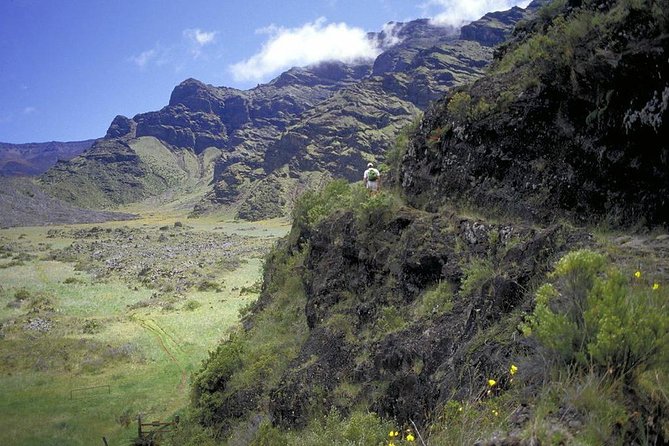
- A 4-mile hike at high altitude: You start around 8,000 feet and continue toward the 10,000-foot summit, so this is more than a scenic roadside stop.
- Rare nature in a volcanic setting: Look for silverswords, nene geese, petrels, archaeological sites, and unusual cinder formations.
- Small groups make a difference: The tour has a maximum of 11 people, with no more than 9 passengers per booking.
- Lunch and snacks are included: You do not need to plan food for the hike, though you should still dress for changing mountain weather.
- A guide-led visit with local context: Expect discussion of Haleakala’s ecology, geology, history, Hawaiian culture, and language.
- Plan ahead: The experience often fills about 42 days before departure, and at least four people are needed for it to operate.
Why Haleakala Crater feels unlike the rest of Maui
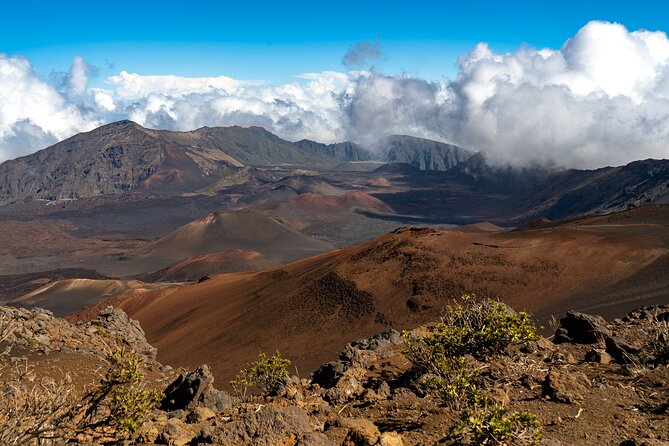
Many Haleakala visits focus on the summit lookout. This experience takes you farther into the crater, where the scenery changes from a high mountain view to a broad volcanic world of rock, cones, and silence.
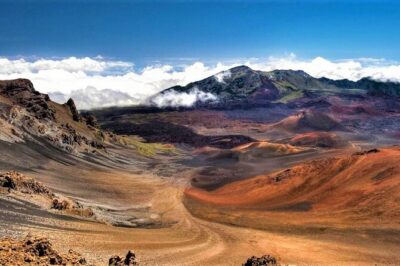
The crater is not a steaming volcanic pit. It is a huge eroded basin shaped by volcanic activity, and its muted colors can make the place feel almost lunar. One fitting review title called it walking on the moon, and that description makes sense once the trail crosses bare, lava-strewn ground with cinder cones rising in the distance.
The silence is part of the appeal. Wind is often the main sound, followed by the crunch of volcanic cinder under your boots. That quiet gives the guide’s explanations more weight. You are not simply looking at scenery. You are learning why this mountain matters to Native Hawaiians and why its plants and animals need protection.
Haleakala National Park is home to more endangered species than any other national park in the United States. You might see nene geese or petrels, and you may pass the famous silversword, a rare plant adapted to the harsh volcanic environment. Sightings are never guaranteed, but the possibility keeps your eyes on the trail and away from your phone.
More Haleakala sunrise and summit trips:
- Maui: Haleakala Sunrise Spectacular with Local Breakfast
★ 4.5 · 2,155 reviews - Haleakala 6 Line Zipline Adventure
★ 5.0 · 913 reviews - Haleakala Sunrise Best Self-Guided Bike Tour
★ 4.5 · 745 reviews
Meeting at Kahului and heading uphill
The day begins at 8:30 a.m. at the Kahului Park & Ride. Hotel pickup and drop-off are not included, so you need to arrange your own way to the meeting point and return there at the end.
That detail matters on Maui, where a tour that begins at a central meeting point can be easier to fit into your plans than one with a long series of hotel pickups. It also means you should leave enough time to reach Kahului without rushing. The same meeting point serves as the endpoint after the drive back down the mountain.
Transport takes you along Haleakala Highway and Crater Road. The road climbs steadily from the coast into a very different climate and setting. The tour does not treat the drive as an afterthought. Guides use the time to discuss the mountain’s history and ecology, helping you understand what you are seeing once you begin walking.
The elevation is important. You may be used to hiking on Maui at sea level, but this route begins at roughly 8,000 feet. Even a moderate trail can feel harder at that height. I would approach the day with patience rather than trying to match someone else’s pace.
The first stop at 8,000 feet
The hike begins along a thin trail scattered with lava and cinder. This first section gives you time to get used to the altitude before the route continues higher. It is also where you stop for hearty snacks and a view toward the crater floor.
That pause is more useful than it may sound. A high-altitude hike is not the place to wait until you feel exhausted before eating. The included snacks help you keep going, and the guides can monitor the group while explaining the terrain.
The early section is visually spare. Do not expect a green forest or a shady coastal path. The volcanic ground, open sky, and distant cinder cones create a more severe kind of beauty. The lack of familiar plant cover makes each silversword or bird sighting feel important.
This is also a good part of the route for asking questions. Guides have been praised for explaining plant species, birds, geology, Hawaiian pronunciation, and the park itself. The strongest part of a guided crater hike is often the connection between those subjects. A cinder cone is not just a colorful mound, and a rare plant is not just a photo opportunity.
Climbing toward the 10,000-foot summit
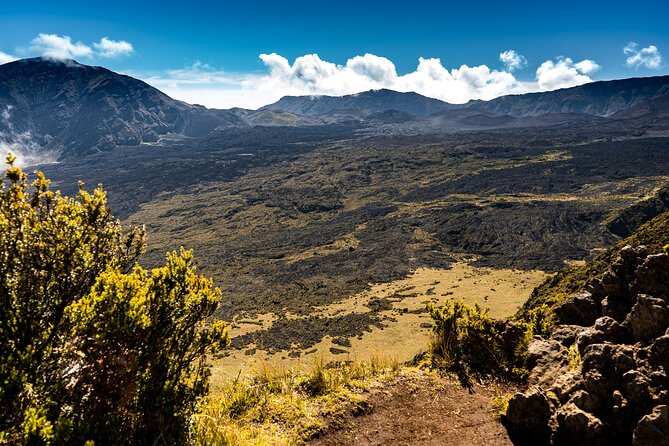
From the 8,000-foot section, the route continues toward the summit at about 10,000 feet, or 3,048 meters. The description calls the hike moderately difficult, but that phrase should not be read as effortless. One French-language account specifically described the trekking pace as fairly strong and recommended some training beforehand.
You do not need to be an expert hiker, but a reasonable level of fitness will help. The route covers about four miles, and the altitude can make the distance feel longer. If you usually enjoy walking but rarely hike, build in some preparation before your Maui trip.
The route is not described as one continuous push. It includes separate hiking sections, which some people may appreciate because the breaks divide the effort. One person wished the hike had been longer but also preferred a single continuous hike instead of two sections. That is a fair point: the format gives you pauses, but it may not satisfy someone looking for a long, uninterrupted trek.
As you climb, the cinder cones become the visual focus. Their colors vary across the crater, creating soft bands of red, brown, gray, and other muted volcanic shades. The beauty here is not tropical. It is spare and mineral, with the weather and light doing much of the work.
More Maui hikes:
- Small Group Waterfall and Rainforest Hiking Adventure on Maui
★ 5.0 · 1,417 reviews - Waterfall & Rainforest Hiking Adventure with Hotel Pickup
★ 5.0 · 518 reviews - Road To Hana: Maui Waterfall Hiking Tour in Private Jeep
★ 5.0 · 343 reviews - Maui: Rainforest Waterfalls Guided Hike with Picnic Lunch
★ 4.9 · 274 reviews
Cinder cones, rare plants, and quiet trails
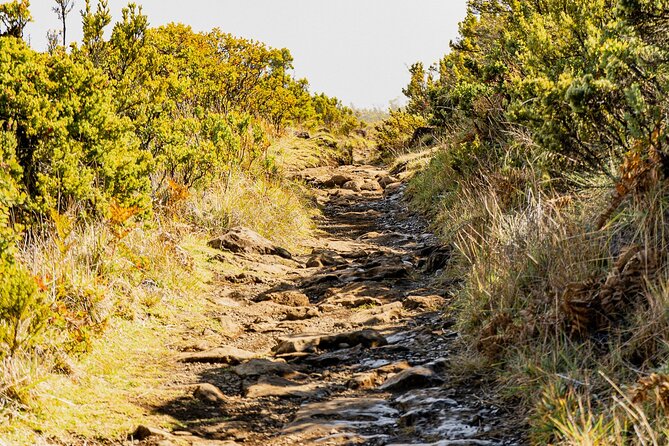
The cinder cones are the most distinctive feature of the walking portion. They look as if they have been pushed up from below, frozen in place after volcanic activity. The guides explain the geology, so you can see the crater as a living record rather than a collection of dramatic shapes.
The trail may also lead past archaeological sites. These add another layer to the visit, especially because Haleakala is considered a sacred home of the gods by Native Hawaiians. The cultural setting deserves respect. This is not simply an outdoor playground, and a good guide helps you understand that without turning the experience into a lecture.
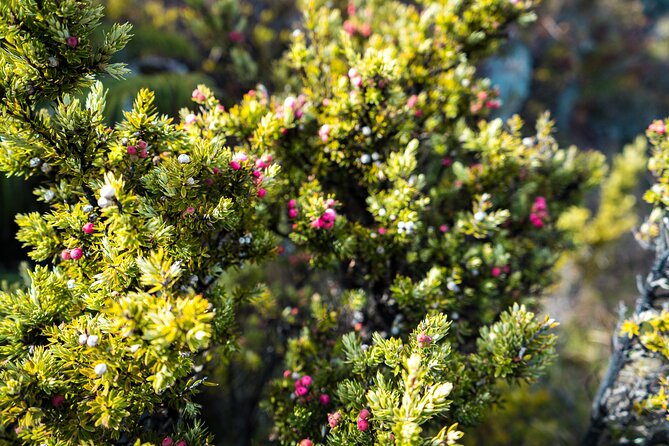
The plant life is easy to overlook if you are focused on the wide views. Silverswords bloom from rocky ground, and endangered birds may appear along the route. Your guide can point out what you would likely miss on your own.
I would bring a camera, but do not let it take over the walk. The mountain’s scale is hard to capture in a single frame. The tour guides have helped with photographs, including taking striking images for social media, but the best memory may be the silence between the pictures.
Lunch, snacks, and the value of a guided day
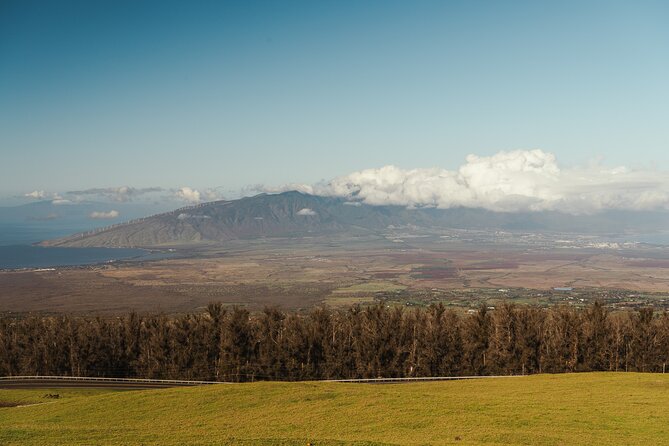
Food is included, with nutritious lunch and snacks provided during the experience. That improves the value in two ways. First, you do not need to pack a full meal for a seven-hour outing. Second, planned food stops help break up the physical work of the hike.
Lunch is not the only thing you are paying for. The $208.38 price includes a local guide, transport up and down the mountain, interpretation, food, and the structure of a full day inside a demanding national park setting. You are also paying for a small group rather than trying to organize the route and mountain logistics alone.
Still, the price is not low. If you only want to see Haleakala from a viewpoint, you can find less expensive ways to visit the mountain. This tour earns its cost mainly if you want to walk into the crater, learn about its ecology and culture, and have someone manage the day’s route and pacing.
The small group helps here. The maximum is 11 people, and one booking can include no more than 9 passengers. Four people are required for the tour to run. A group this size gives the guide a better chance to answer questions and keep track of everyone on rough or exposed trail sections.
The guides make the difference

The guide is central to this experience. The day combines altitude, geology, wildlife, Hawaiian culture, and physical exertion. Without good explanations, the route could become a long walk across gray rock.
Joel has been singled out for guiding and for taking excellent photographs. Marko has been praised for his entertaining, informative approach, with guides in training also helping on the trail. Another guide was described as friendly, engaging, and especially good at explaining island history, plants, animals, and Hawaiian culture.
Those details point to what you should expect from the guiding style: a mix of safety support, natural history, local knowledge, and conversation. The guides do not only identify what is in front of you. They help connect Haleakala to the wider story of Maui.
The guide also controls the practical rhythm of the day. On a challenging hike, it matters that you are given enough time to complete the route. The strongest accounts describe the staff as attentive and reassuring. That is particularly useful for families, mixed-ability groups, or anyone uncertain about how the altitude will affect them.
Weather, fitness, and who should book
The tour operates in all weather, and the activity requires good weather to proceed safely. If poor conditions force a cancellation, you are offered another date or a full refund. Dress for changing conditions rather than assuming Maui’s warm coast tells you anything about the summit.
The minimum age is 8. Children still need to be comfortable with a moderately difficult, high-altitude hike. Parents should think about endurance, not just age. The route is not presented as a casual stroll.
I would recommend this experience to you if you want:
- A closer look at the interior of Haleakala Crater
- A small-group outing with a local guide
- Help understanding rare species and volcanic geology
- A full half-day of walking rather than a quick overlook visit
- Included food and organized transport from Kahului
I would be more cautious if you dislike high elevations, prefer very gentle walks, or want complete control over your return schedule. One poor-weather outing led to an especially disappointing return drive, with extra stops in small tourist towns instead of a direct trip back. That appears to have been an unusual response to weather, but it is worth remembering that group tours do not always offer the flexibility of a private day.
Booking, cancellation, and timing
The experience is often booked about 42 days ahead, so reserve early if your Maui dates are fixed. Confirmation is provided when you book, but the tour can still be canceled if the minimum of four participants is not reached.
You can cancel for a full refund up to 24 hours before the 8:30 a.m. start time. Changes or cancellations inside that window are not accepted for a refund, except when the operator cancels because of poor weather or insufficient numbers.
The seven-hour duration includes the mountain transport, stops, hiking, food, and return to Kahului. Since the day ends back at the meeting point, do not plan an activity with a tight start immediately afterward.
Should you book the Haleakala Crater hike?
Book it if you want more than a lookout photo. The real appeal is walking into the crater while a guide explains the rare plants, endangered birds, volcanic forms, archaeological sites, and Hawaiian cultural meaning around you.
The price makes sense for an organized small-group day with lunch, snacks, transport, and experienced guides. Just prepare for the altitude and a genuine hike. If you do, Haleakala offers one of Maui’s most unusual outdoor experiences: quiet, raw, and far removed from the beaches below.
FAQ
Where does the Haleakala Crater hike start?
The tour starts at the Kahului Park & Ride in Kahului, Hawaii, at 8:30 a.m.
Where does the activity end?
The experience ends back at the Kahului Park & Ride meeting point.
How long is the hike?
The hike covers about 4 miles, or 6.2 kilometers, and the full experience lasts approximately 7 hours.
How difficult is the hike?
The route is considered moderately difficult and requires a moderate level of physical fitness. The trail reaches elevations from about 8,000 feet toward the 10,000-foot summit.
What food is included?
A nutritious lunch and snacks are included.
What is the minimum age?
The minimum age is 8 years old.
Can I cancel for a full refund?
Yes. You can cancel at least 24 hours before the local start time for a full refund. Poor-weather cancellations or cancellations caused by not reaching the minimum number of participants also qualify for a different date or a full refund.
Just added around Maui
- Lahaina: Group Surf Lessons for Beginners★ 5.0 · 3 reviews
- Midmorning Whale Watch from Lahaina Harbor★ 3.5 · 3 reviews
- Clear Kayak Sunset and Glow Tour in Maui★ 3.5 · 3 reviews
- Professional Photographer in Maui★ 4.5 · 3 reviews
- The Ultimate Road to Hana Slingshot Adventure from Kihei Maui★ 5.0 · 3 reviews
- Private Airport Arrivals Rides to Hotel★ 5.0 · 3 reviews
- Brewery and Beach Cruise in a Vintage VW Bus★ 3.5 · 3 reviews
- Lahaina: Private Sunset Sailing Trip & West Maui Mountains★ 5.0 · 3 reviews
Haleakala Sunrise & Summit Tours, compared.
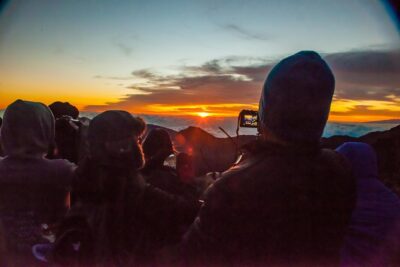
Haleakala Sunrise Spectacular with Local Breakfast
Read our review →


Best Haleakala Downhill Self-Guided Bike Tour with Maui Sunriders
Read our review →
Haleakala Sunrise Tour with Breakfast and West Side Pickup
Read our review →
Haleakala Express Self-Guided Bike Tour with Bike Maui
Read our review →Browse the lists this tour appears in