
Reviewed · CANOES & KAYAKS
Maui Stand Up Paddling 101 at Kalama Park in Kihei
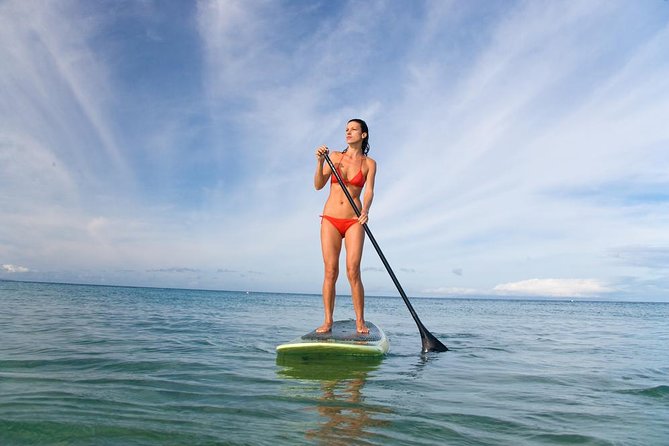
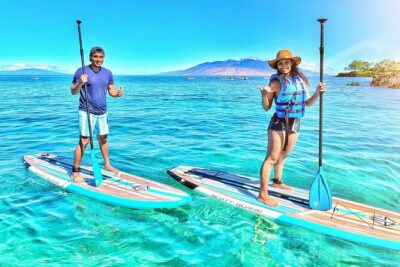
Maui Stand Up Paddling 101 is a friendly way to get on the water without needing prior experience. You begin at Kalama Park in Kihei, learn the basics on the beach, then paddle along south Maui’s clear coast with a guide keeping an eye on the group.
I like the small group limit of 12, which gives the instruction a more personal feel, and I like that the outing may include sea turtles, local stories, and a short rest in the water. The early 8 a.m. start also makes good sense, before the day gets hot.
The main caution is physical: paddleboarding is more strenuous than it looks, especially if you have sore knees or limited strength. You set your own pace, but you still need to kneel, stand, balance, and paddle for much of the two-hour outing.
In This Review
- Key points to know before booking
- Starting at Kalama Park in Kihei
- Beach instruction before you stand up
- Paddling south Maui’s clear coastal water
- Watching for sea turtles along the route
- What the two-hour schedule feels like
- Equipment, refreshments, and what to bring
- Is $118.84 a fair price?
- Who will enjoy this most
- Practical booking and weather advice
- Should you book Maui Stand Up Paddling 101?
- FAQ
- Where does Maui Stand Up Paddling 101 begin?
- What time does the activity start?
- How long does the paddleboarding experience last?
- Does the activity return to the starting point?
- Is prior paddleboarding experience required?
- What equipment is included?
- Are food and drinks provided?
- What should I bring?
- How many people can join the activity?
- Can I cancel for a refund?
- What happens if the weather is poor?
Key points to know before booking
- Beginner-friendly instruction: You receive beach-based safety guidance and a basic introduction before heading out.
- Sea turtle territory: The south Maui coast is known for turtles, and you may paddle near them while keeping a respectful distance.
- Small group of 12 or fewer: The guide can watch individual paddlers and offer help as the group moves along.
- Most gear is supplied: Your package includes a stand-up paddleboard, paddle, leash, booties, and rash guard.
- Simple morning schedule: Meet at 8 a.m. and return to the same location after about two hours.
- Bring a towel and sunscreen: Swimwear is not supplied, and loose jewelry should be left behind.
Starting at Kalama Park in Kihei
The outing begins near S. Kihei Road and Keala Place in Kihei. This is both the meeting point and the return point, so you do not need to arrange a second pickup location at the end.
The 8 a.m. start shapes the whole experience. You get a cooler, calmer part of the morning and still have most of the day left for the beach, a drive, or a slow breakfast afterward. I would book this early in your Maui stay if you can. That gives you time to use the guide’s local suggestions for other meals and activities during the rest of your visit.
Transportation to the meeting point is not included. You need to make your own way there, and the activity is near public transportation. Since the outing begins promptly in the morning, allow enough time to arrive, find the area, and use the restroom before the lesson. The operator specifically recommends doing that before you arrive.
Kalama Park is useful as a launch point because the entire activity stays tied to one easy-to-understand location. You start on shore, head out along the south Maui coast, and paddle back to where you began. That straightforward setup is helpful for families and first-time paddlers who do not want a complicated day of transfers.
More things to do in Kihei:
- Maui South Coast and Molokini Crater Adventure from Kihei
★ 5.0 · 1,575 reviews - Maui Luau: Gilligans’ Island Luau in Kihei
★ 4.0 · 1,130 reviews - Maui: Two Hour Beginner Group Surf Lesson in Kihei
★ 5.0 · 950 reviews
Beach instruction before you stand up
The lesson begins with instruction and a safety talk on the beach. This is an important part of the experience, not a quick formality. You need to understand how to handle the board, use the paddle, attach the leash, and respond if your balance goes wrong.
For a first-time paddler, the biggest challenge is usually not the paddle stroke. It is getting comfortable with the board beneath you. The lesson gives you a chance to hear the basic guidance before you are surrounded by open water.
The activity is designed for people who do not paddle regularly, and the guides watch the group as it moves along. Jaye, Niko, and Brandon are among the guides connected with this experience. Their roles, as described by the operator, focus on making beginners feel safe, explaining things clearly, and allowing people to progress at their own pace.
That said, beginner-friendly does not mean effortless. You may spend time kneeling or standing on a moving board, using your legs and core to stay balanced, while your arms work the paddle. One participant found the outing strenuous because of bad knees, and another felt it required more effort than expected. If you have knee problems or limited mobility, think carefully before booking.
The operator leaves each person to assess their own health and ability. That is fair, but it also means you should not treat the word beginner as a guarantee of easy physical activity.
Paddling south Maui’s clear coastal water
Once the beach portion is complete, you head along the south Maui coastline. The setting is the main reward here: clear blue water, a broad ocean view, and the chance to experience Maui from the surface rather than from a beach chair.
The route is described as an out-and-back paddle. You move away from Kalama Park, stop as needed, and then return to the starting point. This is not a long expedition or a full-day water adventure. It is a compact introduction to stand-up paddling, with enough time to learn, practice, and enjoy the coast.
The guide may pause the group so you can cool off, catch your breath, and listen to stories about local history and folklore. Those breaks matter because they split the physical work into manageable sections. They also give the outing more character than a simple equipment rental.
I like the balance between instruction and sightseeing. You are not only learning a new activity, but you are also being shown a slice of the coast with someone who can add context. The guide’s local recommendations may also be useful after the paddle. Niko, for example, was praised for offering suggestions about local places to eat.
The exact amount of paddling and the pace can vary with the group. A strong paddler may want more distance, while a first-timer may need more time to find a comfortable rhythm. The small group size helps here. With no more than 12 people, the guide has a better chance of noticing who needs a pause or extra help.
Watching for sea turtles along the route
This part of south Maui is also known for sea turtles. The outing may give you a chance to paddle near them and watch from the water.
That possibility adds a memorable wildlife element, but it is best to treat it as a bonus rather than a promise. Turtles are wild animals, and sightings depend on conditions and timing. The supplied details do not guarantee that you will see one on every outing.
If a turtle appears, your position on a paddleboard gives you a pleasant viewing angle. You are already moving quietly across the surface, rather than riding in a large motorized vessel. The guide can help you stay with the group and enjoy the moment without turning the sighting into a chase.
The experience is built around observation, not handling wildlife. Keep your movements calm, follow the guide’s instructions, and give the animals room. That is the right approach for any turtle encounter in Hawaii.
More South Maui trips:
- Maui Snorkeling Adventure From Ma’alaea Harbor to Molokini
★ 4.5 · 1,997 reviews - From Maalaea: Whale Watching Tour Aboard the Quicksilver
★ 4.5 · 1,280 reviews - Maui: Te Au Moana Luau at The Wailea Beach Marriott Resort
★ 4.5 · 1,247 reviews - Makena Turtle Town Eco Adventure in Maui
★ 5.0 · 1,020 reviews
What the two-hour schedule feels like
Two hours is a sensible length for a first paddleboarding lesson. It is long enough to cover safety, practice the basic technique, paddle along the coast, pause for a break, and return to shore. It is also short enough that you are unlikely to spend the entire day exhausted from a new activity.
The morning generally follows this pattern:
- Meet at the Kihei location at 8 a.m.
- Complete beach instruction and the safety briefing.
- Head onto the water with your board, paddle, leash, booties, and rash guard.
- Paddle along the south Maui coast.
- Stop for a rest, cooling off, local stories, and possible turtle watching.
- Paddle back to Kalama Park.
- Finish with refreshments at the starting point.
The experience is described as an easy morning out, but I would qualify that. The schedule is easy to fit into a vacation, while the physical work can be moderate for a beginner. You should be ready to use your legs, arms, and balance for much of the session.
The out-and-back format also keeps the day predictable. You do not need to wonder how you will get back to your car or where the activity ends. You return to the same meeting point.
Equipment, refreshments, and what to bring
The price includes the central equipment you need:
- Stand-up paddleboard
- Paddle
- Leash
- Booties
- Rash guard
- Bottled water
- Juice
- Snack bars
That is a strong convenience for a beginner. You do not need to rent a board separately or decide which paddle size and safety gear to use. The rash guard and booties also reduce the number of special items you need to pack.
Bring your own beach towel and sunscreen. Swimwear is not included, so wear what you plan to use in the water. You should also leave rings, watches, necklaces, and other loose items behind. The rule is simple: if it can come off, do not bring it.
The operator includes bottled water, juice, and snack bars, but one person did not receive the promised water or snacks during the outing. I would bring a small backup drink and a light snack if that matters to you, while still expecting the listed refreshments to be part of the package.
Use the restroom before arriving. That is a minor tip, but it matters on a water activity where the group is moving away from shore.
Is $118.84 a fair price?
At $118.84 per person, this is not the cheapest way to get on a paddleboard. You are paying for more than board time, though. The fee covers instruction, safety guidance, an outfitted board, paddle, leash, booties, rash guard, a professional guide, and a two-hour coastal outing.
For someone who has never paddleboarded, that bundled price can make sense. You avoid buying or separately renting gear, and you get help with the part that is hardest to arrange alone: learning how to use the board safely and confidently.
The small group is also part of the value. A large lesson may leave you waiting for help or trying to follow instructions from a distance. A group capped at 12 gives the guide more room to notice individual problems, especially when people have different levels of balance and fitness.
The value is weaker if you already paddle often and only want board access. In that case, a rental may offer more freedom and possibly a lower cost, though this experience includes the guide, route, and local commentary that a simple rental does not.
I would view the price as reasonable for a first-time lesson and guided coastal outing, particularly for families who want equipment and instruction handled together. I would not book it solely for the refreshments or a guaranteed turtle sighting.
Who will enjoy this most
This experience fits families, first-time paddleboarders, and anyone who wants a guided introduction rather than a solo rental. Kids can take part, and the small group can make the outing feel less intimidating for people who are unsure about their balance.
It also suits a vacation schedule well. The early start leaves your afternoon open, while the two-hour length keeps the activity from taking over the day.
You should have a basic level of physical readiness. You need to manage the board, paddle, and balance, and you should be comfortable with the possibility that your knees and arms will work harder than expected. Most people can participate, but the activity is not suited to every health or mobility level.
Service animals are allowed. The experience is offered in English, and confirmation is provided when you book.
Practical booking and weather advice
The experience is usually reserved several days ahead, with an average lead time of about five days. That is not an absolute requirement, but it is a useful planning signal. I would reserve before your Maui trip, especially if you need a particular morning.
You can cancel for a full refund if you do so at least 24 hours before the 8 a.m. start time. Changes or cancellations inside that 24-hour window are not accepted for a refund.
Weather matters because the activity takes place on the ocean. If poor weather causes the operator to cancel, you can choose another date or receive a full refund. The same choice applies if the minimum number of participants is not reached.
For the best chance of enjoying the lesson, schedule it early in your stay, bring sunscreen and a towel, and avoid wearing loose jewelry. Most importantly, be honest with yourself about your knees, balance, and general fitness before paying.
Should you book Maui Stand Up Paddling 101?
I would book this if you want a guided first paddleboarding lesson with a simple route, supplied equipment, and a chance to see south Maui from the water. The friendly teaching style associated with guides such as Niko, Jaye, and Brandon is a real strength, and the group size gives beginners useful attention.
I would hesitate if you have bad knees, dislike repetitive physical activity, or expect a completely effortless morning. You may find the work harder than the photos suggest, and the promised snacks and water may not always be offered as expected.
For families and first-timers, the balance is good: clear instruction, a two-hour schedule, possible turtle watching, and a return to the same park. For experienced paddlers, the lesson may feel basic. For everyone else, it is a practical way to try the sport without committing to a full day on the water.
FAQ
Where does Maui Stand Up Paddling 101 begin?
The activity begins at S. Kihei Road and Keala Place in Kihei, Hawaii. The meeting point is near Kalama Park.
What time does the activity start?
The start time is 8 a.m.
How long does the paddleboarding experience last?
The outing lasts approximately two hours.
Does the activity return to the starting point?
Yes. The activity ends back at the same meeting point.
Is prior paddleboarding experience required?
No. The outing is designed as a basic introduction for first-time paddleboarders, including kids.
What equipment is included?
The package includes a stand-up paddleboard, paddle, leash, booties, and rash guard.
Are food and drinks provided?
Bottled water, juice, and snack bars are included. You should still consider bringing a backup drink or snack because refreshments may not always be offered during the outing.
What should I bring?
Bring a beach towel, sunscreen, and your own swimwear. Leave rings, watches, necklaces, and other loose personal items behind.
How many people can join the activity?
The maximum group size is 12 participants.
Can I cancel for a refund?
You can cancel at least 24 hours before the start time for a full refund. Cancellations or changes made less than 24 hours before the start are not accepted for a refund.
What happens if the weather is poor?
If the operator cancels because of poor weather, you can choose a different date or receive a full refund.
More kayak and paddle trips on Maui
- Maui Clear Kayak and Snorkel Tour: Swim with turtles (Makena)
★ 5.0 · 551 reviews - Maui: Turtle Town Kayak and Snorkel Tour
★ 4.7 · 345 reviews - Turtle Reef Kayak Tour of Makena, Maui
★ 4.5 · 328 reviews - Private Stand Up Paddle Boarding Tour in Turtle Town, Maui
★ 5.0 · 293 reviews
Just added around Maui
- Lahaina: Group Surf Lessons for Beginners★ 5.0 · 3 reviews
- Midmorning Whale Watch from Lahaina Harbor★ 3.5 · 3 reviews
- The Ultimate Road to Hana Slingshot Adventure from Kihei Maui★ 5.0 · 3 reviews
- Clear Kayak Sunset and Glow Tour in Maui★ 3.5 · 3 reviews
- Professional Photographer in Maui★ 4.5 · 3 reviews
- Private Airport Arrivals Rides to Hotel★ 5.0 · 3 reviews
- Brewery and Beach Cruise in a Vintage VW Bus★ 3.5 · 3 reviews
- Lahaina: Private Sunset Sailing Trip & West Maui Mountains★ 5.0 · 3 reviews
Canoes & Kayaks, compared.
Maui Clear Kayak and Snorkel Tour: Swim with turtles (Makena)
Read our review →
Private Stand Up Paddle Boarding Tour in Turtle Town, Maui
Read our review →
Clear Kayak Tour with Pontoons and Optional Snorkeling-Unlimited
Read our review →
Kayak & Turtle Town Snorkel(Turtles Guaranteed) + Whale Watching
Read our review →
South Shore Turtle Kayak and Snorkel Experience
Read our review →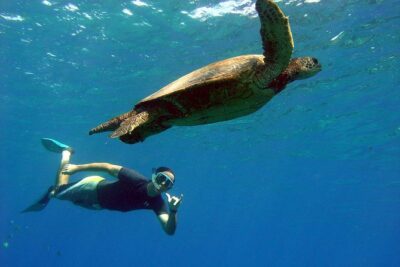
Browse the lists this tour appears in