
Reviewed · MAUI
Make a Kukui Nut Bracelet on Maui
A bracelet-making class becomes a small lesson in Hawaiian culture at the Wonderful World of Aloha Cultural Activity Center. You learn about the kukui nut and tree, then choose your preferred style of nut and build a bracelet using threading and knotting techniques. The finished piece is yours to wear, while a separate hand-carved keepsake comes included.
I like two things right away: the class is hands-on, and you do not need any previous craft experience. I also like the chance to arrive early and explore three small galleries with more than 20 costume exhibits tracing Polynesian migrations, plantation-era life, and modern Hawaiʻi. The main consideration is scale. This is an informal cultural activity inside a mall, not a large museum or a full afternoon program.
In This Review
- Key points to know before booking
- A simple craft with a Hawaiian purpose
- Arriving at Queen Kaʻahumanu Center
- What happens at 1:00 p.m.
- Why the costume galleries matter
- Is $25 a fair price?
- Who will enjoy this most?
- Practical details that make the visit easier
- What to bring and how to plan your hour
- My call: book it for the personal touch
- FAQ
- Where does the kukui nut bracelet activity take place?
- What time does the class begin?
- How long does the experience last?
- Are supplies included?
- Is a guide included?
- Do I need previous bracelet-making experience?
- What is included besides the bracelet materials?
Key points to know before booking
- The one-hour class starts at 1:00 p.m. Plan to arrive early for check-in and the costume galleries.
- You choose the kukui nuts and make the bracelet yourself, with instruction on threading and knotting.
- The cultural center is inside Queen Kaʻahumanu Center in Kahului, which makes this an easy stop if you are already near the mall.
- Three galleries offer more than 20 costume exhibits, giving the craft session some cultural context.
- Supplies and a hand-carved keepsake are included in the $25 price.
- The activity suits all ages, with a maximum group size of 25 and an English-speaking local guide.
A simple craft with a Hawaiian purpose
The appeal here is not complicated. You sit down, listen to an explanation of the kukui nut, and make something with your own hands. That pace works well for families, couples, friends, and work groups who want a short cultural activity without committing to a long show or formal tour.
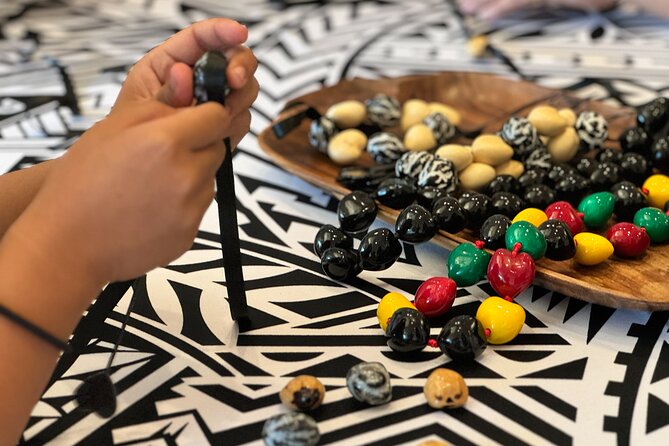
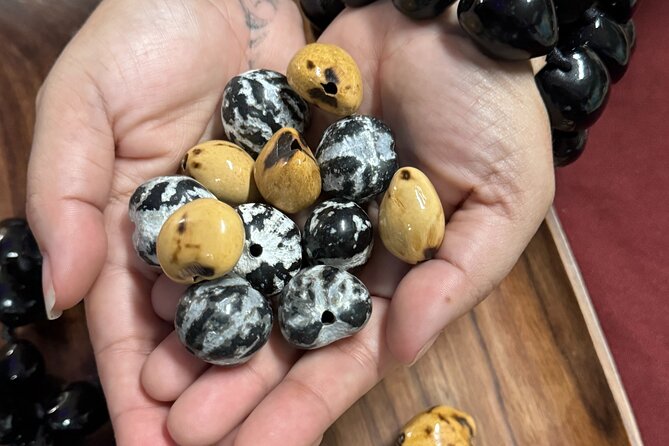
The instructor explains the source, history, preparation, and uses of the kukui nut and the kukui nut tree. You then select the style of nut you want and learn how to thread and knot the pieces into a bracelet. Since supplies are provided and no experience is needed, you can focus on the process rather than bringing tools or figuring out a craft pattern on your own.
That hands-on element matters. A lecture can give you facts, but a bracelet gives you a physical reminder of the place. The activity also leaves room for conversation. The instructor can talk with you while you work, which is especially useful if you want to ask about Hawaiian culture, dance, or the role of the kukui nut.
The class has received especially strong praise for the warmth of the instructor. The teaching style is described as friendly and kind, with plenty of conversation when attendance is small. On a quiet day, you may have an unusually personal session. On a busier day, the maximum group size is 25, so the feel could be more like a group workshop.
Other Maui trips people book alongside this one:
- Maui Pineapple Farm Tour in Haliimaile
★ 5.0 · 2,855 reviews - Small-Group Road to Hana Adventure Tour with Pickup & Lunch
★ 5.0 · 2,637 reviews - Maui Eco-Raft Tour: Eye-Level Whale or Dolphin Watching – Lahaina
★ 5.0 · 2,482 reviews
Arriving at Queen Kaʻahumanu Center
The meeting point is the Oni Foundation Inc, Wonderful World of Aloha Cultural Activity Center at 275 West Kaʻahumanu Avenue in Kahului. The center is inside Queen Kaʻahumanu Center, so do not expect a separate outdoor attraction or a traditional village setting.
This location is practical. It is near public transportation, and the activity starts at 1:00 p.m. If you are staying elsewhere on Maui, allow time to find the center inside the mall and check in. Arriving early is worthwhile because the pre-class displays are part of the experience.
The center itself is small. That is important to understand before booking. You are not coming for a large museum with extensive galleries or hours of exhibits. Instead, you get an accessible introduction tucked into a familiar public setting. For a short, low-cost activity, that can be a useful advantage.
The three galleries present costume exhibits connected with different periods and cultural influences in Hawaiʻi. The displays cover the First Polynesians, plantation-era communities, and modern Hawaiʻi. They also show how different cultures influenced dance, art, and daily life in the islands.
Give yourself enough time to look closely rather than treating the exhibits as a quick waiting room. The displays help explain why a small object, a costume, or a dance tradition can carry cultural meaning. They also make the bracelet class feel less isolated from the wider story of Hawaiʻi.
What happens at 1:00 p.m.
The formal lesson begins at 1:00 p.m. The instructor starts by discussing the kukui nut and kukui nut tree. You hear about where the material comes from, how it is prepared, and how it has been used.
The supplied information does not name the instructor, so you should not expect a particular teacher by name. The teaching style, however, is clearly central to the activity. The instructor explains the craft, answers questions, and guides you through the steps rather than simply handing over a kit.
Next, you select the style of nut for your bracelet. That choice gives you a small measure of control over the final look. The activity is not just a demonstration where you watch someone else work. You handle the materials and create the piece yourself.
The instructor then shows you the threading and knotting technique. These are practical skills, but the class is designed for beginners. You do not need previous jewelry-making experience, and supplies are included. If you are bringing children, the all-ages format makes this a reasonable family choice, though younger children will still need normal adult supervision during any hands-on craft.
The session lasts about one hour. That makes it easy to fit into a day of sightseeing, shopping, or other activities in Kahului. It also means the class stays focused. If you want a long cultural presentation, a full dance performance, or an extended workshop, this will probably feel short.
Why the costume galleries matter
The galleries are more than an extra attraction before class. They give you a quick visual guide to the many communities that shaped Hawaiʻi. The exhibits cover migration, plantation life, dance, clothing, and modern island culture.
That range is useful because Hawaiʻi is not one single cultural story. The displays present change over time and the interaction of different communities. Even a short visit can help you see Hawaiian life as something shaped by movement, exchange, and adaptation.
The center describes the galleries as an informal alternative to a traditional museum. That approach may suit you if you prefer approachable displays and conversation to formal labels and a quiet institutional setting. It may not suit you if you want detailed museum scholarship, a large collection, or a polished high-production attraction.
The best plan is to arrive early enough to browse before the lesson. Since the class itself lasts about an hour, the galleries provide a little extra substance without turning the visit into a half-day commitment.
Same island, a completely different kind of day:
- Maui Snorkeling Adventure to Molokini and Turtle Town
★ 4.5 · 2,221 reviews - Maui: Haleakala Sunrise Spectacular with Local Breakfast
★ 4.5 · 2,155 reviews - Maui Snorkeling Adventure From Ma’alaea Harbor to Molokini
★ 4.5 · 1,997 reviews - Maui: Turtle Town Snorkel with Photo and Video
★ 5.0 · 1,916 reviews
Is $25 a fair price?
At $25 per person, this sits in the affordable range for a Maui activity. The price includes the supplies, the English-speaking local guide, the bracelet-making lesson, and a hand-carved keepsake. You are paying for instruction and cultural context, not just for a preassembled souvenir.
The value is strongest if you enjoy making things. A person who wants a quick, personal reminder of Maui may find the price reasonable, especially because the finished bracelet reflects your own work. The keepsake adds another tangible item to take home.
The value is less convincing if you are mainly looking for a large cultural attraction. The center is small, the class lasts roughly an hour, and refreshments or meals are not included. You will need to arrange your own food and drink.
I would also consider the location. If Queen Kaʻahumanu Center is already convenient for you, the activity is easy to add. If you are crossing a large part of Maui only for this one-hour class, transportation time can change the calculation. The booking pattern, with reservations often made around 24 days in advance, suggests that planning ahead is sensible, especially during a busy holiday period.
Who will enjoy this most?
This is a good match for families seeking a calm, creative activity. All ages can participate, and the basic technique is beginner-friendly. Children get a project to work on, while adults receive a short cultural explanation and a keepsake that does not feel entirely generic.
Couples may also enjoy it. A small class can create time for conversation with the instructor, and a handmade bracelet is more personal than a quick purchase from a shop. If you happen to attend during a quiet period, the session may feel almost private.
Groups of friends and co-workers are another natural fit. The activity gives everyone the same project, but each person can select a style of nut and create an individual bracelet. With a maximum of 25 participants, it can accommodate a fairly large group while remaining manageable.
I would be more cautious about booking if you want a major cultural performance or a full-day educational program. This is an introduction. It offers a short explanation, a craft lesson, and a look at costume exhibits. Its strength is accessibility, not depth or scale.
Practical details that make the visit easier
The experience is offered in English, and confirmation is provided when you book. A mobile ticket is accepted, which means you can keep the booking details on your phone rather than carrying printed paperwork.
The activity begins and ends at the same meeting point. That makes the schedule simple, especially if you have another plan later in the day. The listed stop is Queen Kaʻahumanu Center, and no separate transportation between locations is part of the experience.
Service animals are allowed, and the activity is considered suitable for most participants. It is near public transportation. Gratuity is not included, so plan to tip separately if you feel the instruction deserves it.
Free cancellation is available if you cancel at least 24 hours before the 1:00 p.m. start time. A cancellation made less than 24 hours before the activity is not refunded, and late changes are not accepted. The cutoff uses Maui local time.
What to bring and how to plan your hour
You do not need to bring craft supplies. Materials are provided, and the instructor teaches the process from the beginning.
The most useful thing you can bring is a little extra time before 1:00 p.m. Find the center, check in, and look through the three galleries before taking your seat. Rushing in at the start could mean missing part of the costume displays.
Since food and refreshments are not included, eat beforehand or plan something afterward. The experience is short enough to pair with other activities, but keep in mind that the bracelet lesson has a fixed start time.
If you are booking for a group, confirm that everyone understands the session is an introductory craft class. That expectation will help prevent disappointment. You are not signing up for an elaborate jewelry workshop. You are learning a simple technique while hearing about the cultural background of the material.
My call: book it for the personal touch
I would book this experience if I wanted a modestly priced, family-friendly cultural activity with something handmade to take home. The best features are the friendly instruction, the chance to choose and create your own bracelet, and the three galleries that add useful context before the class.
I would skip it if I wanted a large museum, a formal performance, or several hours of programming. The center is small, and the lesson is brief. That is not a flaw for the right schedule, but it is a real limitation.
For most people, the decision comes down to location and expectations. If you are already in Kahului or want an easy afternoon activity, $25 buys a pleasant hour, basic cultural insight, all supplies, and a keepsake. Arrive early, browse the displays, and treat the bracelet as a small piece of your Maui experience rather than the main cultural event of your trip.
FAQ
Where does the kukui nut bracelet activity take place?
It takes place at the Oni Foundation Inc, Wonderful World of Aloha Cultural Activity Center inside Queen Kaʻahumanu Center at 275 W Kaʻahumanu Avenue, Kahului, Maui, Hawaii.
What time does the class begin?
The lesson begins at 1:00 p.m.
How long does the experience last?
The activity lasts approximately one hour.
Are supplies included?
Yes. Supplies for making the bracelet are included.
Is a guide included?
Yes. An English-speaking local guide leads the activity.
Do I need previous bracelet-making experience?
No. The instructor teaches the threading and knotting process, and no experience is necessary.
What is included besides the bracelet materials?
Each participant receives a hand-carved keepsake. Meals, refreshments, and gratuity are not included.
Just added around Maui
- Lahaina: Group Surf Lessons for Beginners★ 5.0 · 3 reviews
- Midmorning Whale Watch from Lahaina Harbor★ 3.5 · 3 reviews
- Clear Kayak Sunset and Glow Tour in Maui★ 3.5 · 3 reviews
- Professional Photographer in Maui★ 4.5 · 3 reviews
- The Ultimate Road to Hana Slingshot Adventure from Kihei Maui★ 5.0 · 3 reviews
- Private Airport Arrivals Rides to Hotel★ 5.0 · 3 reviews
- Brewery and Beach Cruise in a Vintage VW Bus★ 3.5 · 3 reviews
- Lahaina: Private Sunset Sailing Trip & West Maui Mountains★ 5.0 · 3 reviews