Reviewed · FULL-DAY
Maui Ocean Center All Day Admission Ticket
The Humpback Whales of Hawaiʻi 3D Sphere is the star here. In a short, wraparound film, you appear to float among humpback whales, a memorable way to understand the size and grace of animals that visit Hawaiian waters. I also like that the aquarium focuses on species native to Hawaii, rather than presenting a generic collection of tropical fish.
I love the live Pacific coral display and the chance to gently touch selected sea creatures at the tide pool. The main drawback is value: at $55.44 per person, you may see the whole place in about two hours, and some families report finishing in less than an hour.
In This Review
- Key points to know before you go
- What Maui Ocean Center does best
- Starting at Maalaea and planning your time
- The Humpback Whales of Hawaiʻi 3D Sphere
- Living Reef and the value of seeing live coral
- Open Ocean, sharks, rays, and the large animals
- Touch pools and hands-on learning
- Daily presentations and cultural activities
- Food, shopping, and a practical break
- Is $55.44 a fair price?
- Access, comfort, and who should take care
- Cancellation and ticket details
- Who will enjoy Maui Ocean Center most?
- Should you book this Maui aquarium ticket?
- FAQ
- Where is Maui Ocean Center located?
- What are the admission hours?
- How long should I plan for the visit?
- What is included with admission?
- Are food and drinks included?
- Is parking included?
- Can children under five enter the whale sphere?
- Are service animals allowed?
- What are the cancellation rules?
- Is the aquarium accessible?
Key points to know before you go
- The 3D whale sphere is the main highlight: It offers a short, powerful virtual encounter with humpback whales.
- More than 60 exhibits focus on Hawaiian waters: Expect reef fish, sharks, rays, turtles, octopuses, eels, jellyfish, and live coral.
- You can return all day: Admission is valid from 9 a.m. to 5 p.m., with final entry at 4 p.m.
- Daily presentations add useful context: Talks take place at Turtle Lagoon, Shark Nursery Bay, Open Ocean, Discovery Pool, Living Reef, and Nursery Bay.
- Families have plenty to do: The tide pool allows a two-finger touch, and young children can watch sharks, turtles, and colorful fish at close range.
- Plan for extra costs: Parking is $3 per hour, and food and drinks are separate.
What Maui Ocean Center does best
Maui Ocean Center is not a giant aquarium on the scale of Monterey Bay Aquarium or a major mainland city aquarium. It is a medium-sized attraction built around one clear idea: helping you understand the marine life of Hawaii.
That focus gives the place a strong sense of purpose. You are not looking at unrelated animals from around the world. The exhibits explain the fish, corals, turtles, sharks, and other creatures found around the Hawaiian Islands. For a first visit to Maui, that local connection matters.
The center has more than 60 exhibits, including indoor and outdoor areas. You can move from small reef fish and unusual creatures such as frogfish to large animals in the 750,000-gallon Open Ocean exhibit. The scale changes often enough to keep the visit moving, even though the entire aquarium is fairly compact.
The facility also ties marine life to Hawaiian culture and conservation. You may encounter cultural activities, a wood carving demonstration, and displays about the importance of healthy reefs and ocean habitats. The educational material is useful without requiring you to read every sign to enjoy the animals.
A few more Maui trips worth weighing up
- Road to Hana: Full-Day Scenic Drive with Blacksand & Waterfalls
★ 4.5 · 837 reviews - Private Full-Day Waterfall Beach and Jungle Tour of Maui
★ 5.0 · 85 reviews - Ultimate Hana Full-Day Adventure Tour
★ 5.0 · 51 reviews
Starting at Maalaea and planning your time
The aquarium is at 192 Maalaea Road in Wailuku, in the Maalaea area. Your ticket provides all-day access between 9 a.m. and 5 p.m., with the last admission at 4 p.m. That makes this more flexible than a fixed-time tour, even though the experience itself is generally described as taking about two hours.
I would allow at least two hours if you want to see the main exhibits and the whale sphere. Add more time if you plan to attend presentations, watch the sharks for a while, read the conservation signs, eat at Seascape Restaurant, or browse the gift shop.
The all-day policy is useful for families. You can arrive early, leave for lunch or another Maalaea activity, and return later the same day. It also helps if you want to build your visit around the daily talks rather than simply walking through once.
Parking is not included. It costs $3 per hour and is handled through the ParkLinq app or a QR code on arrival. Food and drinks are also separate. If you are coming from a cruise ship, transportation costs can change the value quickly. One reported taxi fare was about $100 round trip from the ship dock, so check your transport plan before booking.
The Humpback Whales of Hawaiʻi 3D Sphere
Make the whale sphere a priority. This is the most distinctive part of the visit and the feature most likely to stay with you after you leave.
The presentation places you beneath the surface with humpback whales through a large 3D viewing experience. It is short, but the close-up perspective gives you a better sense of the animals’ size than a standard aquarium tank can. The effect is especially strong when a whale passes across the screen at close range.
The show is not a substitute for seeing whales in the wild, of course. You are watching a film rather than observing live animals, and the presentation does not last long. Still, it gives you a useful introduction to humpbacks and adds something different from the fish tanks and reef exhibits.
There is one important family detail: children under five are not permitted to participate in the whale sphere. If you are booking mainly for very young children, check how much value the rest of the aquarium offers for your group.
Living Reef and the value of seeing live coral
The Living Coral Reef exhibit is one of the center’s strongest sections. It presents live Pacific corals, with the surrounding fish using the reef as shelter and habitat.
Coral can be easy to overlook when you are waiting for a large animal to appear. Here, the reef itself receives proper attention. You can see how much color, structure, and life comes from organisms that may look like rock at first glance.
I especially like the local emphasis. Hawaii’s reefs are not just pretty scenery for snorkelers. They provide homes for fish and other marine life, and their condition affects the wider ocean system. The aquarium’s conservation message gives the display more weight than a simple decorative tank.
Some visitors expect a larger coral collection and feel the center could show more live reef displays. That is a fair criticism if coral is your main reason for visiting. The Living Reef is worthwhile, but the aquarium is not an enormous coral research center with endless galleries.
Same island, a completely different kind of day:
- Maui Pineapple Farm Tour in Haliimaile
★ 5.0 · 2,855 reviews - Small-Group Road to Hana Adventure Tour with Pickup & Lunch
★ 5.0 · 2,637 reviews - Maui Eco-Raft Tour: Eye-Level Whale or Dolphin Watching – Lahaina
★ 5.0 · 2,482 reviews - Maui Snorkeling Adventure to Molokini and Turtle Town
★ 4.5 · 2,221 reviews
Open Ocean, sharks, rays, and the large animals
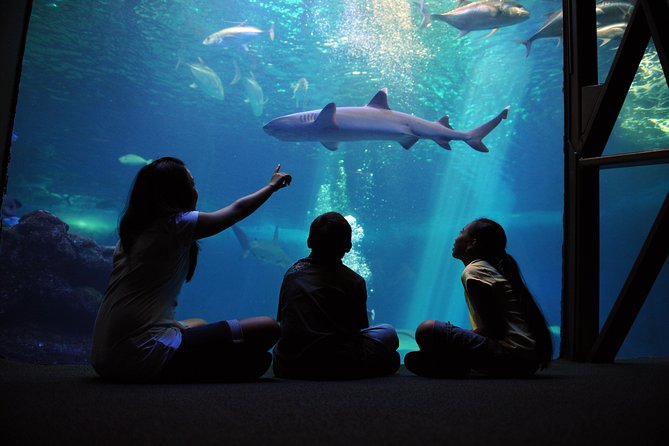
The 750,000-gallon Open Ocean exhibit is where the aquarium feels largest. It gives you a chance to watch sharks, stingrays, and other Hawaiian marine life moving through a broad tank rather than a small display.
A clear tunnel is a good place to stop. Sharks may pass overhead or beside you, and a manta ray can come close enough for strong photos. Another feature includes a glass floor with sharks swimming below, adding a little drama without requiring any special activity.
Shark Nursery Bay provides a different look at these animals. The daily presentations at 11:45 a.m. and 1:45 p.m. explain more about sharks and their early development. If your children are fascinated by sharks, these talks are worth planning around.
Turtle Lagoon has daily Marine Naturalist Presentations at 10:30 a.m. and 2:30 p.m. Turtles are an easy favorite, but the talks help you notice details beyond the animals’ obvious appeal. You get more from the exhibit when you understand how the animals fit into Hawaii’s marine environment.
Other displays include octopuses, eels, sea jellies, tropical reef fish, and unusual species such as frogfish. The smaller tanks are often a strength because you can stand close and study animals that would disappear in a huge tank.
Touch pools and hands-on learning
The Tide Pool Tactile Discovery area lets you get close to marine animals with a careful two-finger touch. This is a simple activity, but it can turn a quick aquarium visit into a more memorable one for children.
The point is not to handle the animals freely. You are shown how to touch gently and briefly. That small rule also reinforces the center’s conservation message: contact with wildlife should be careful and limited.
The Discovery Pool is another place where presentations and hands-on learning add value. Exact presentation times can vary by area, so check the schedule when you arrive. Staff members are available around the exhibits to answer questions about fish, plant life, and coral.
For families with toddlers, the aquarium is easy to walk around and offers many visual stops. Sharks, turtles, and colorful fish tend to hold a young child’s attention. Keep close watch around the aquarium and nearby play areas, since the facility includes spaces that can draw a child away from the exhibits.
Daily presentations and cultural activities
You can visit every exhibit without attending a presentation, but the short talks make the admission price easier to justify. They provide the missing piece that a tank alone cannot offer: why the animal matters, where it lives, and what threatens its habitat.
The listed talks include Turtle Lagoon at 10:30 a.m. and 2:30 p.m., plus Shark Nursery Bay at 11:45 a.m. and 1:45 p.m. Presentations also take place at Open Ocean, Discovery Pool, Living Reef, and Nursery Bay.
A cultural wood carving demonstration adds a welcome change of pace. It connects the aquarium to local traditions instead of treating Hawaii only as a setting for marine exhibits.
If you want to attend several talks, arrive close to opening and plan your route. If you are content with a self-guided visit, two hours may be enough. The difference between a short visit and a half-day outing comes down mostly to how much you read, how long you watch the animals, and how many scheduled activities you attend.
Food, shopping, and a practical break
Seascape Restaurant provides ocean-view dining on site. It serves fresh catch specials and island-inspired food, and it is described as an Ocean-Friendly certified restaurant.
That makes lunch convenient, especially if you are using the all-day admission and do not want to leave the center. Food is not included, so budget for it separately. The restaurant can also make the aquarium more useful as a slower half-day stop rather than a quick indoor attraction.
The Maui Ocean Treasures gift shop offers souvenirs and ocean-themed items. It is a pleasant final stop, though shopping is optional and should not affect your decision to buy the ticket.
Is $55.44 a fair price?
At $55.44 per person, this is not a bargain-priced attraction. The admission makes the most sense if you value the local focus, the whale sphere, the live coral, and the chance to build a longer visit around talks and lunch.
The price feels less convincing if you are comparing Maui Ocean Center with very large mainland aquariums. Several people find the facility small, and some finish in an hour. If you only walk through the tanks without stopping for presentations, you may not feel you received a full-day experience.
The all-day entry changes the calculation. You can return between 9 a.m. and 5 p.m., and you can slow down rather than rushing from exhibit to exhibit. Families with children may also value the easy layout, touch pool, nearby food, and indoor setting more than a visitor seeking a huge aquarium spectacle.
The whale sphere is included, as are the daily presentations, cultural demonstration, and touch pool. That package is stronger than a basic tank-only admission. Parking, meals, and transportation remain extra, so add those costs before deciding.
Access, comfort, and who should take care
Most of the aquarium is described as accessible and easy to walk through. It can work well for families with small children, and many of the main exhibits are suitable for visitors who need a straightforward route.
There is a caution around the stairwells used for some presentations. A reported protruding rock created a tripping concern for a visitor with mobility difficulties. If stairs or uneven surfaces are a serious issue for you, ask staff for the easiest route and take care in those areas.
Service animals are allowed, and the center is near public transportation. Most people can participate, but the whale sphere restriction for children under five is important if you have a young family.
Cancellation and ticket details
The ticket is mobile, so you can present it from your phone. Confirmation is provided when you book.
You can cancel up to 24 hours before the scheduled start time for a full refund. Cancellations or changes made inside 24 hours are not accepted and are not refunded. The cutoff uses local Maui time, so keep that in mind if your booking was made in another time zone.
Who will enjoy Maui Ocean Center most?
I would recommend this aquarium to families, ocean lovers, first-time Maui visitors, and anyone wanting a weather-friendly activity with a strong Hawaiian connection. The touch pool, sharks, turtles, and short whale film give children several clear favorites, while the coral and conservation displays reward adults who take time with the signs.
It also suits people who want a calm, self-paced outing. You do not need to follow a tour group or keep to a fixed route. You can move quickly through familiar exhibits or spend an hour studying small reef fish.
I would be more cautious if you have already visited major aquariums such as Monterey Bay Aquarium and expect the same size and range. You may find Maui Ocean Center modest by comparison. Its strength is not scale. Its strength is the close look at Hawaiian waters and the combination of animals, culture, conservation, and the whale sphere.
Should you book this Maui aquarium ticket?
Book it if you want a focused introduction to Hawaii’s sea life, especially if the humpback whale sphere and live coral interest you. Arrive early, note the presentation times, and plan to stay at least two hours so you get more than a quick walk-through.
Skip it if your only goal is the biggest aquarium possible or if $55.44 feels high for a compact attraction. For the best value, use the all-day access, attend at least one Turtle Lagoon or Shark Nursery Bay presentation, visit the Open Ocean tunnel, and allow time for the Living Reef and touch pool.
FAQ
Where is Maui Ocean Center located?
Maui Ocean Center is at 192 Maalaea Road, Wailuku, Hawaii 96793.
What are the admission hours?
You can enter between 9 a.m. and 5 p.m. The last chance for entry is 4 p.m.
How long should I plan for the visit?
The visit takes about two hours for many people, but you can stay longer because the ticket allows all-day access. Presentations, reading, lunch, and repeat visits to favorite exhibits can extend your time.
What is included with admission?
Admission includes the Humpback Whales of Hawaiʻi 3D Sphere, all-day aquarium access, Turtle Lagoon presentations, a cultural wood carving demonstration, the Tide Pool Tactile Discovery area, Shark Nursery Bay presentations, and the Living Coral Reef exhibit.
Are food and drinks included?
No. Food and drinks are not included. Seascape Restaurant is on site and serves fresh catch specials and island-inspired cuisine.
Is parking included?
No. Parking costs $3 per hour and is paid through the ParkLinq app or a QR code upon arrival.
Can children under five enter the whale sphere?
Children under five are not permitted to participate in the whale sphere experience.
Are service animals allowed?
Yes. Service animals are allowed.
What are the cancellation rules?
You receive a full refund if you cancel at least 24 hours before the experience start time. Cancellations and changes made less than 24 hours before the start time are not accepted and are not refunded.
Is the aquarium accessible?
Most of the exhibits are accessible, but some presentation areas use stairwells that may be difficult for visitors with mobility concerns. Take care around uneven features and ask staff for route guidance if needed.
Just added around Maui
- Lahaina: Group Surf Lessons for Beginners★ 5.0 · 3 reviews
- Midmorning Whale Watch from Lahaina Harbor★ 3.5 · 3 reviews
- Clear Kayak Sunset and Glow Tour in Maui★ 3.5 · 3 reviews
- Professional Photographer in Maui★ 4.5 · 3 reviews
- The Ultimate Road to Hana Slingshot Adventure from Kihei Maui★ 5.0 · 3 reviews
- Private Airport Arrivals Rides to Hotel★ 5.0 · 3 reviews
- Brewery and Beach Cruise in a Vintage VW Bus★ 3.5 · 3 reviews
- Lahaina: Private Sunset Sailing Trip & West Maui Mountains★ 5.0 · 3 reviews
Full-Day, compared.
Road to Hana: Full-Day Scenic Drive with Blacksand & Waterfalls
Read our review →
Private Full-Day Waterfall Beach and Jungle Tour of Maui
Read our review →

Maui Farm Distillery and local craft experience Full-Day Tour
Read our review →

VIP Private Full-Day Road to Hana Tour from Lahaina-Kapalua
Read our review →