
Reviewed · MAUI
Polynesian Wood Carving on Maui
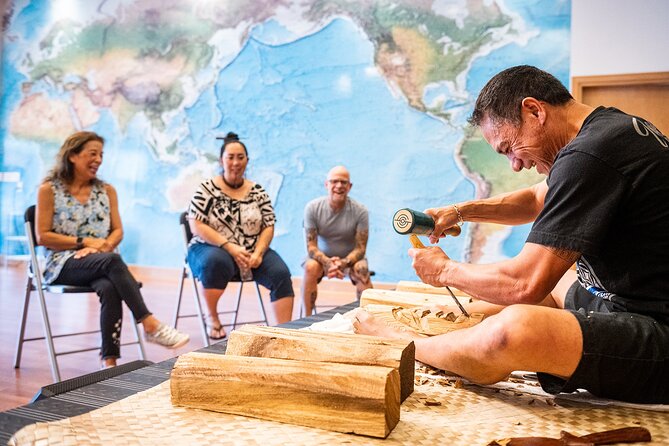
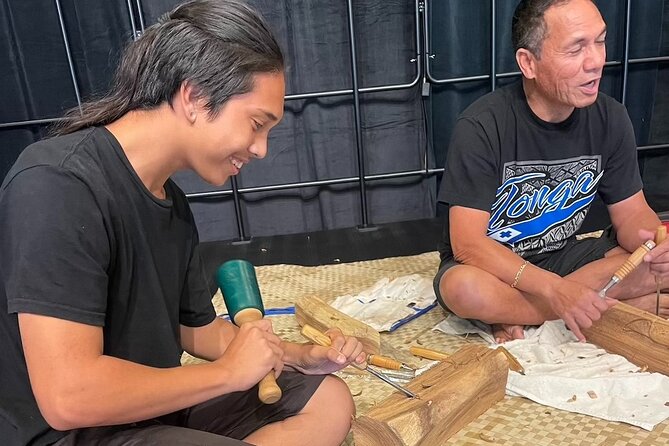
The most memorable part of this Kahului activity is watching Uncle Vili turn a plain piece of wood into a Polynesian carving while explaining the meaning behind the shapes, tools, and methods. You do not just watch a demonstration. You hear family stories and get a chance to handle the tools yourself.
I like the three cultural galleries, which give you useful background before the carving begins. I also like the low $25 price, English-speaking local guide, and family-friendly format. The main drawback is the short one-hour schedule: if you arrive right at 1:00 pm, you may not have much time for the galleries before the talk starts.
In This Review
- Key points to know before booking
- A working carver, not a staged souvenir demonstration
- Start with the three galleries at 275 W Kaahumanu Avenue
- From raw wood to finished carving
- Why the family story matters
- A compact Kahului activity for a mixed-age group
- Timing, location, and booking value
- What you will and will not get
- Who should book this Maui carving session?
- Should you book Polynesian Wood Carving on Maui?
- FAQ
- Where does the Polynesian wood-carving activity meet?
- What time does the activity start?
- How long does the activity last?
- Who leads the carving demonstration?
- Can I try wood carving myself?
- Are the cultural galleries included?
- Is the activity suitable for children?
- Is cancellation free?
Key points to know before booking
- Uncle Vili leads the carving session: He explains his family’s generations of carving and demonstrates a piece from start to finish.
- Three galleries add cultural context: Exhibits cover Polynesian migrations, plantation-era Hawaiʻi, and modern Hawaiian life.
- You get to try the craft: Wood and tools are supplied, and no previous experience is needed.
- The activity begins at 1:00 pm: Arrive early at the Wonderful World of Aloha Cultural Activity Center to see the exhibits first.
- The price is easy on the budget: At $25 per person, this is a modest-cost cultural activity in Kahului.
- The group can reach 25 people: That keeps the event manageable, though it may feel less personal at full capacity.
A working carver, not a staged souvenir demonstration
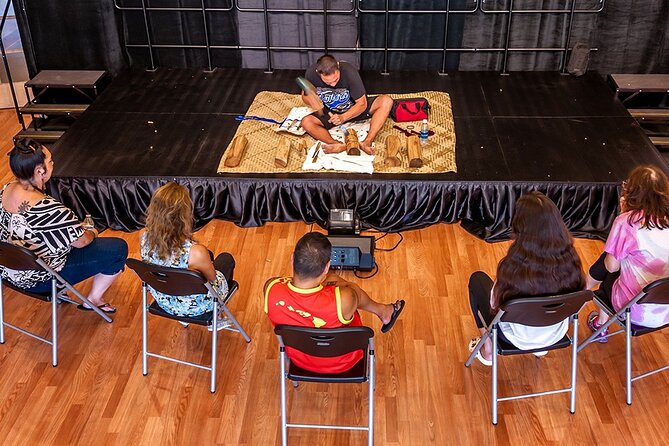
Many cultural activities give you a short talk, a photo opportunity, and a quick purchase stop. This one takes a more useful route. You watch a carver work with real tools, hear how he approaches the craft, and then try a small part of the process yourself.
The focus is not simply on making a decorative object. Uncle Vili explains the history, tradition, and symbolism tied to Polynesian carving. He also shares the story of his own family’s carving tradition, which gives the demonstration a personal connection that a generic craft lesson would lack.
You should expect a talk-story format rather than a formal lecture. That means the hour is built around conversation, explanation, and demonstration. The tone appears friendly and down to earth, and the two available comments describe the presentation as both informative and welcoming. One particularly useful detail is that you are treated as part of the family conversation rather than pushed through a rigid performance.
That personal style will suit you if you enjoy learning through stories. If you want a quiet, highly structured class with a finished object to take home, this may feel less exacting. The activity provides wood and tools to try, but no finished carving or take-home item is listed.
Other Maui trips people book alongside this one:
- Maui Pineapple Farm Tour in Haliimaile
★ 5.0 · 2,855 reviews - Small-Group Road to Hana Adventure Tour with Pickup & Lunch
★ 5.0 · 2,637 reviews - Maui Eco-Raft Tour: Eye-Level Whale or Dolphin Watching – Lahaina
★ 5.0 · 2,482 reviews
Start with the three galleries at 275 W Kaahumanu Avenue
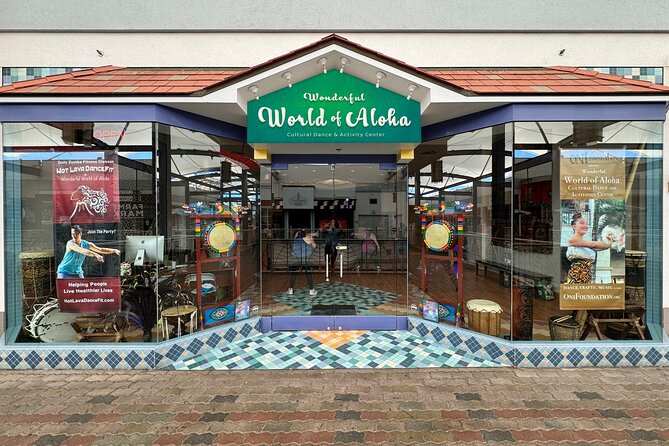
The meeting point is the Oni Foundation Inc, Wonderful World of Aloha Cultural Activity Center, at 275 W Kaahumanu Ave in Kahului. The activity is connected with Queen Kaʻahumanu Center, making it an easy addition to a day already spent in central Kahului.
Arrive early. The galleries are part of what makes this more than a one-hour craft demonstration, yet the scheduled session begins at 1:00 pm. The displays cover several stages of Hawaiian and Polynesian life:
- The arrival and migrations of the first Polynesians
- Cultural changes during the plantation era
- Modern Hawaiʻi
- The influence of different cultures on dance, art, and daily life
The galleries help you understand that Polynesian carving did not develop in isolation. Art, movement, family traditions, and outside influences all shape the story being presented. You will get more from Uncle Vili’s explanations if you have already spent a few minutes looking at these displays.
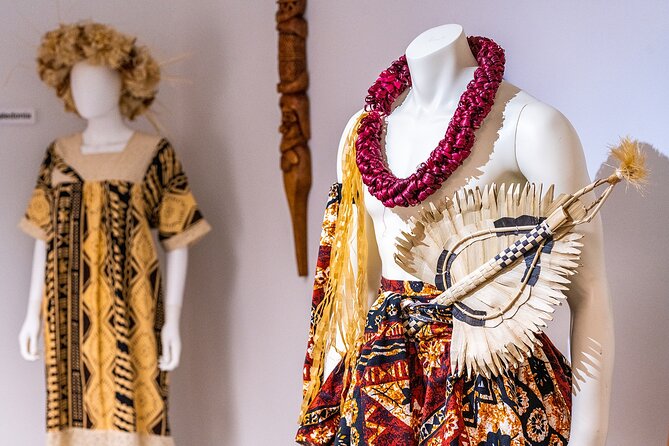
The exhibits are also useful for families. Younger children may not follow every historical point, but costumes and visual displays give them something concrete to look at before the hands-on portion begins. Older children can connect the objects and cultural changes in the galleries with the carving demonstration.
The practical issue is time. The listed duration is about one hour, and the carving session starts at 1:00 pm. If you arrive just before the start, you should expect to choose between a quick look at the galleries and getting settled for the demonstration. Arriving early is the simplest way to see both.
From raw wood to finished carving
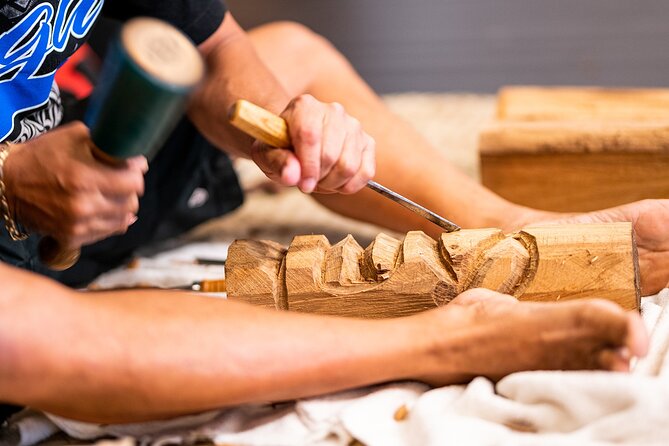
At 1:00 pm, the focus shifts to Uncle Vili and his tools. He explains the equipment, the methods he uses, and his general approach to this ancient craft. The value here is in seeing the order of the work, not just the final shape.
You can watch the carving develop from beginning to end. That lets you see how a carver thinks through the material and how the design takes shape over time. The demonstration also gives you a chance to ask questions and connect the physical work with the cultural meaning behind it.
The supplied information does not identify the type of wood, the exact design, or the finished size of the piece. That is worth noting because you should not book this expecting a specific souvenir or project. The point is the process, the explanation, and the opportunity to make a small attempt yourself.
The hands-on portion is a strong feature for anyone who learns by doing. Tools and wood are provided, and no experience is needed. You are not expected to arrive with carving skills. The activity is designed to let you try the craft after seeing how an experienced carver handles it.
That said, the session lasts only about an hour. The demonstration, cultural discussion, and hands-on turn all share the same block of time. You should expect an introduction to carving rather than a full workshop with long individual instruction.
Why the family story matters
Polynesian carving is not presented as a stand-alone hobby here. Uncle Vili talks about tradition, symbolism, and the generations of carving in his family. That connection makes the activity feel less like a craft class and more like a window into how artistic skills and cultural knowledge pass between generations.
This is also where the activity earns its modest price. At $25 per person, you are paying for a local guide, access to the galleries, the demonstration, and the chance to use supplied tools and wood. You are not paying for a meal, refreshments, or a finished product, so the value depends on how much you care about cultural explanation and personal instruction.
I would rate the price as especially good for families or pairs looking for a short indoor activity. A two-person visit costs $50 before gratuity, and you get a full hour of guided content without committing to a half-day tour. For someone interested only in buying an object, the value is weaker. For someone who wants to understand how the object is made, it is stronger.
The two available comments place special weight on the presentation’s warmth and information. The tone is described as friendly, and the story element made the activity feel personal. That is useful guidance: come ready to listen and ask questions, not just take a quick turn with a tool.
Same island, a completely different kind of day:
- Maui Snorkeling Adventure to Molokini and Turtle Town
★ 4.5 · 2,221 reviews - Maui: Haleakala Sunrise Spectacular with Local Breakfast
★ 4.5 · 2,155 reviews - Maui Snorkeling Adventure From Ma’alaea Harbor to Molokini
★ 4.5 · 1,997 reviews - Maui: Turtle Town Snorkel with Photo and Video
★ 5.0 · 1,916 reviews
A compact Kahului activity for a mixed-age group
The activity is open to all ages, and most people can participate. Service animals are allowed, and the center is near public transportation. The group size can reach 25 people, which is small enough to keep the session focused but large enough that you should not assume one-on-one coaching.
For families, the format has several advantages. The galleries offer a visual introduction, the demonstration gives children a clear story to follow, and the hands-on portion adds a physical activity after the talk. Adults can listen for the historical and symbolic details while younger children watch the carving take shape.
For couples or solo visitors, the activity works best as a compact cultural stop between other plans in Kahului. It does not occupy a whole morning or afternoon. The one-hour length also makes it easier to fit into a day when you have other commitments.
The activity is offered in English. You should keep that in mind if you want detailed explanations of tools, family tradition, and symbolism. The listed maximum is 25 people, so arriving early may help you get settled before the talk begins, though no specific seating arrangement is provided.
Because the activity ends back at the meeting point, you do not need to arrange a separate return transfer. The listing does not include meals or refreshments, so plan those separately. No special equipment is required from you because wood and tools are supplied.
Timing, location, and booking value
The scheduled start is 1:00 pm at the Wonderful World of Aloha Cultural Activity Center. The meeting address is 275 W Kaahumanu Ave, Kahului, HI 96732. A mobile ticket is accepted, and confirmation is provided when you book.
The activity is often reserved about 27 days ahead. That does not mean every date will sell out, but it is a useful planning clue. If this is important to your Maui schedule, reserving several weeks in advance is sensible, especially if you need a particular afternoon.
The cancellation terms are flexible as long as you act in time. You can cancel for a full refund up to 24 hours before the local start time. Changes or cancellations made within 24 hours are not accepted for a refund.
Gratuity is not included. If Uncle Vili’s time and instruction make the visit worthwhile for you, plan for a tip separately, although the amount is up to you. Meals and drinks are also separate, so this is best viewed as a focused cultural activity rather than a full outing with food included.
The location near public transportation may help if you are already in Kahului. The supplied details do not give parking information or directions from other parts of Maui, so you should check your route before setting out. Since the meeting point and end point are the same, the transport question is mainly about getting there and returning to your next stop.
What you will and will not get
You will get a local English-speaking guide, a carving demonstration, cultural background, and the chance to try the tools and wood provided. You will also have access to three galleries covering major periods and influences in Hawaiian life.
You will not get a meal, refreshments, or a finished carving listed as part of the activity. You should also avoid thinking of this as a long formal lesson. The duration is approximately one hour, so the hands-on portion is likely to be an introduction rather than extended practice.
The strongest reason to book is the combination of personal storytelling and practical demonstration. You see how the work is done, hear why it matters, and make a small attempt yourself. That three-part structure gives the hour more substance than a display-only visit.
The main reason to skip it is if your schedule is too tight to arrive early. The galleries deserve attention, but the 1:00 pm start leaves little spare time if you arrive at the last minute. You may also prefer another activity if you want a larger production, a longer class, or a specific finished item.
Who should book this Maui carving session?
I would recommend it to families, culture-minded visitors, and anyone who wants a short activity away from the beach. It is also a good choice if you like meeting local teachers and learning through conversation instead of reading labels on your own.
It suits first-time carvers because no experience is needed. It also works for people who have carved before and want to hear about Polynesian methods and symbolism, though the one-hour format may be too brief for advanced practice.
The low price makes it easy to add to a Maui itinerary without a major commitment. You can combine it with other plans in Kahului, provided you allow enough time to reach the center and do not count on the activity to provide food or transportation.
I would be more cautious about booking if your interest is limited to souvenir shopping. This activity is about watching, listening, and trying the craft. The reward is the understanding you gain from the demonstration, not an item you are promised to take home.
Should you book Polynesian Wood Carving on Maui?
Book it if you want an affordable, personal look at Hawaiian and Polynesian carving, especially if you enjoy stories tied to family tradition. Uncle Vili’s demonstration, the three galleries, and the chance to try the tools give you three good reasons to spend the hour.
Skip it if you need a long workshop, a guaranteed finished piece, or a tour with food included. For most families and curious adults, though, the $25 cost and compact schedule make this a sensible cultural stop. Arrive early, give the galleries their due, and treat the carving portion as an introduction to a living craft.
FAQ
Where does the Polynesian wood-carving activity meet?
It meets at Oni Foundation Inc, Wonderful World of Aloha Cultural Activity Center, 275 W Kaahumanu Ave, Kahului, HI 96732, USA.
What time does the activity start?
The activity starts at 1:00 pm.
How long does the activity last?
The experience lasts approximately one hour.
Who leads the carving demonstration?
The session is led by an expert local carver known as Uncle Vili.
Can I try wood carving myself?
Yes. Wood and tools are provided, and no previous carving experience is needed.
Are the cultural galleries included?
Yes. You can peruse three galleries covering Polynesian migrations, the plantation era, modern Hawaiʻi, and cultural influences on dance, art, and Hawaiian life.
Is the activity suitable for children?
Yes. The experience is open to all ages, and most people can participate.
Is cancellation free?
Yes, you can cancel for a full refund at least 24 hours before the local start time. Cancellations or changes made less than 24 hours before the start are not accepted for a refund.
Just added around Maui
- Lahaina: Group Surf Lessons for Beginners★ 5.0 · 3 reviews
- Midmorning Whale Watch from Lahaina Harbor★ 3.5 · 3 reviews
- Clear Kayak Sunset and Glow Tour in Maui★ 3.5 · 3 reviews
- Professional Photographer in Maui★ 4.5 · 3 reviews
- The Ultimate Road to Hana Slingshot Adventure from Kihei Maui★ 5.0 · 3 reviews
- Private Airport Arrivals Rides to Hotel★ 5.0 · 3 reviews
- Brewery and Beach Cruise in a Vintage VW Bus★ 3.5 · 3 reviews
- Lahaina: Private Sunset Sailing Trip & West Maui Mountains★ 5.0 · 3 reviews