
Reviewed · AUDIO TOURS
Self-Guided Audio Driving Tour in Maui
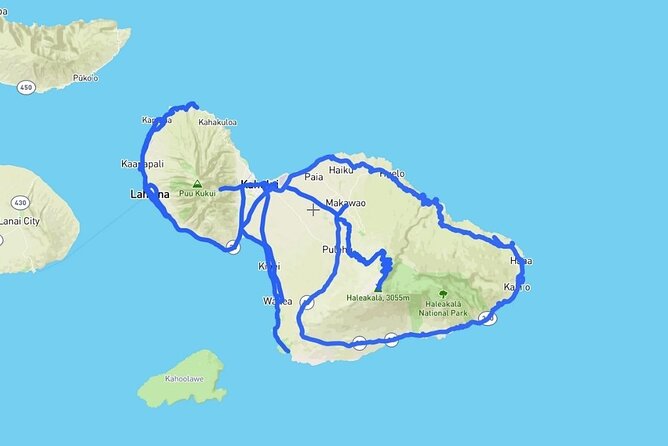
Maui is made for road trips, but its best sights are scattered across the island. This self-guided audio tour turns your rental car into a private guide, with stories and directions playing automatically as you approach waterfalls, beaches, historic towns, and trailheads. The Road to Hana and Haleakala receive the most attention, though the app also covers West and South Maui.
I like the freedom to stop for ten minutes or half a day without holding up a group. I also like the price: $29.99 covers everyone in a vehicle, up to eight people, rather than charging per person. The main drawback is that this is still a phone-based product. You must download it correctly before setting out, and GPS, audio, and a long day on the road can heat up some phones.
In This Review
- Key points for your Maui drive
- Why this audio guide works well on Maui
- The Road to Hana, from Twin Falls to Kipahulu
- Haleakala Crater and the high road
- Iao Valley, Makawao, and Maui’s cultural side
- South Maui beaches and La Perouse Bay
- West Maui beaches, whales, and old Lahaina
- Price, phone setup, and the real value
- Who should book this Maui driving tour?
- Should you book it?
- FAQ
- How much does the Maui self-guided audio tour cost?
- How long does the tour take?
- Does the tour work without cell service?
- Does the tour include national park admission?
- Do I need reservations for any stops?
- Is the audio tour available in languages other than English?
- Can I cancel for a full refund?
Key points for your Maui drive

- 465-plus GPS-triggered audio points: Stories, directions, history, and practical tips begin as your car reaches different locations.
- One purchase for the whole car: At $29.99 per group of up to eight, the value improves sharply when shared by family or friends.
- Road to Hana guidance: The app helps you choose among waterfalls, beaches, gardens, lava tubes, and cultural sites when time is short.
- Offline operation: Download the tour over Wi-Fi or cellular data before leaving. Cell service is not needed once the tour is stored on your phone.
- Flexible timing: Use the tour for roughly 8 to 16 hours, split it across days, or return to it later since it does not expire.
- Important reservations remain your job: Wai’anapanapa entry and Haleakala sunrise visits require advance arrangements that the audio guide does not provide.
Why this audio guide works well on Maui
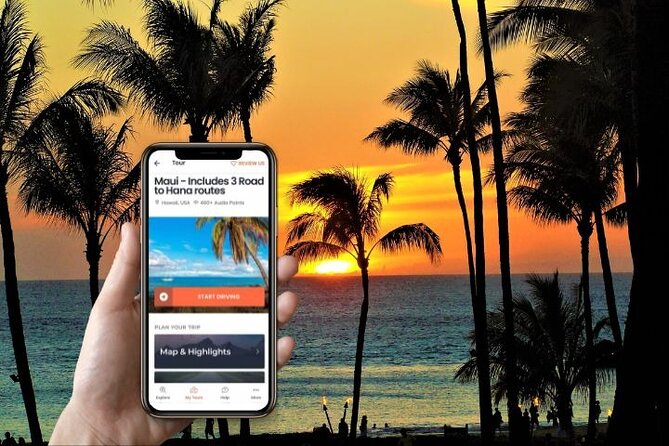
The clever part is not simply hearing facts through your car speakers. The GuideAlong app uses your phone’s GPS to trigger commentary according to your position and direction. You do not need to keep checking a map or tap a button at every stop.
That matters on the Road to Hana, where narrow roads, curves, waterfalls, and scattered pullouts compete for your attention. The narration can point out a stop before you pass it, explain what makes it worthwhile, and help you decide if it fits your day.
The commentary also gives the drive a sense of place. You hear about Hawaiian culture, local history, geology, legends, food stops, and practical restrictions. It is not the same as having a person sitting beside you, but it is much more useful than driving with only a printed list of attractions.
You can begin anywhere in Maui and finish anywhere in Maui. That makes the guide useful for a full island stay, not just one fixed route. The app includes suggested half-day, full-day, and multi-day plans, but you can ignore those and build your own route.
More audio tours of Maui:
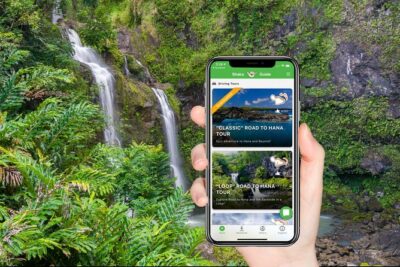
- Shaka Guide Maui “Classic” Road to Hana Audio Driving Tour
★ 4.5 · 210 reviews - Ultimate Self-Driving Audio Tour of Road to Hana, Maui
★ 4.5 · 145 reviews - Self-Guided Audio Driving Tour in Road To Hana
★ 4.5 · 87 reviews
The Road to Hana, from Twin Falls to Kipahulu
If you use the tour for only one drive, make it the Hana Highway. The route is packed with places that are easy to miss, and the audio timing helps you sort the worthwhile stops from the merely convenient ones.
Twin Falls is often an early break. You can walk part of the roughly 1.5-mile trail through bamboo and cross streams on the way to the falls. Conditions can be muddy, so shoes with a firm grip matter. The farmstand is a useful place for a tropical fruit smoothie, though the supplied information does not promise exact opening hours.
At Ke’anae Arboretum, you can see golden-stemmed bamboo, ginger, papaya, hibiscus, and rainbow eucalyptus. The brightly marked eucalyptus bark is the star for many people. The short walk is free, and a continuation along Piinaau Stream reaches old terraces once used for taro cultivation.
The Hana Lava Tube offers a change from waterfalls and ocean views. You can walk into Maui’s most accessible lava tube, or turn back if enclosed spaces bother you. It is a good short stop, especially when you want something different from another roadside viewpoint.
Upper Waikani Falls, also called the Three Bears, is a quick photo stop. After heavy rain it may look like one thick fall, while lighter flow can separate it into three streams. Wailua Falls offers another easy roadside view between Hana and the national park area.
At Koki Beach, you get views toward Alau Island, an old volcanic cinder cone offshore. The place also connects with Hawaiian stories about Pele and the demigod Maui. Hamoa Beach is better suited to a longer rest, with sand, shade, bathrooms, and showers, but there are no lifeguards. Keep a close eye on children and check the water before entering.
Wai’anapanapa State Park deserves planning. Its black sand beach, sea arch, blowhole, volcanic shoreline, and Hawaiian legends make it one of Hana’s essential stops. Reservations are required for entry, and admission is not included in the $29.99 purchase.
At the far end of the route, Ohe’o Gulch sits inside Haleakala National Park at sea level. This is the unusual feature of Haleakala: the park reaches from the summit at more than 10,000 feet down to the coast.
The Ohe’o Pools, often called the Seven Sacred Pools, may or may not be open for swimming or wading. Conditions control access, so check ahead rather than counting on a swim. Short walks lead toward the wild shoreline, and the area is also the trailhead for Pipiwai Trail.
Pipiwai is one of the most rewarding hikes on the route. The full trail is about four miles, with 650 feet of climbing, and usually takes two hours or more. You pass bamboo forest and reach views of Makihiku Falls before continuing toward Waimoku Falls. It can feel strenuous in hot conditions, so arriving by about 2 p.m. is suggested if you plan to finish and drive back.
The audio guide can help you fit these stops together, but it cannot remove the basic problem of Hana: there is simply too much to see in one rushed day. Use the planner, choose your priorities, and accept that skipping a few sights is better than racing through all of them.
Haleakala Crater and the high road
The drive to Haleakala feels completely different from Hana. Instead of wet forest and sea cliffs, you reach a high volcanic summit with colorful rock, sand, cinder cones, and wide views across the crater.
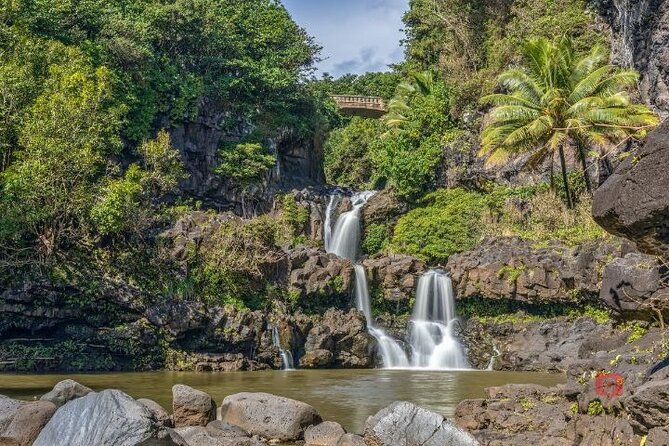
The summit Visitor Center is at about 9,700 feet. Two minutes farther by car, Red Hill reaches 10,023 feet, the highest point on Maui. Several overlooks offer different views of the crater, erosion, and the island beyond. If you are prepared for hiking, trails lead farther into the high country.
You need a reservation for sunrise. At other times of day, no sunrise reservation is required, but you still need to pay the national park entrance fee unless you have a valid pass. Neither the park fee nor timed entry is part of the audio tour.
The GPS commentary is particularly useful here because it explains what you are seeing as the road climbs. One early booking experience found the opening section slow from its chosen starting point, but the guide became much more useful once the destination was Haleakala. That is a fair warning: the app follows your location, so the pace and order depend on where you begin.
Kalahaku Overlook is another worthwhile stop on the climb. It gives you a view into the eroded crater and outward across Maui. Plan extra time if you want to hike, since the basic two-hour suggestion for Haleakala covers the summit sights more than a long trail day.
Iao Valley, Makawao, and Maui’s cultural side
Maui is not only beaches and volcanic viewpoints. The audio route also brings you to places that explain how people shaped the island.
Iao Valley, west of Wailuku and Kahului, is known for the Iao Needle, a granite spire left from earlier volcanic activity. Steep valley walls catch the trade winds and produce frequent rain. Afternoon showers can arrive hard and end quickly, so carry something waterproof and do not assume a wet forecast ruins the visit.
Nearby Kepaniwai Park and Heritage Gardens honors the many cultures that contributed to modern Maui and Hawaii. A short visit of about 30 minutes lets you walk among buildings and gardens connected with those communities. Admission details can vary by stop, and the supplied information identifies the stop as not included, so check current conditions before you go.
Makawao is one of Hawaii’s remaining paniolo towns. Paniolos are Hawaiian cowboys, connected to cattle ranching and horsemanship traditions introduced with help from Mexican cowboys. Galleries and eateries make Makawao a pleasant follow-up to Haleakala, especially if you prefer a small town to another scenic pullout.
Kahanu Garden offers one of the strongest cultural stops along the Hana Highway. Its collections focus on Pacific Island plants, including the hala tree, and explain how plants traveled with ancient voyagers. The garden is also home to Pi’ilanihale Heiau, a huge lava-rock temple and National Historic Landmark.
Allow about 90 minutes for a self-guided visit or two hours if you take the recommended guided option. This is not a quick roadside photograph. It rewards a slower schedule and adds cultural context that a simple driving map would miss.
More self-guided routes around Maui:
- Haleakala Sunrise Best Self-Guided Bike Tour
★ 4.5 · 745 reviews - Best Haleakala Downhill Self-Guided Bike Tour with Maui Sunriders
★ 5.0 · 496 reviews - Haleakala Express Self-Guided Bike Tour with Bike Maui
★ 4.5 · 271 reviews - Haleakala Summit Best Self-Guided Bike Tour with Bike Maui
★ 4.5 · 107 reviews
South Maui beaches and La Perouse Bay
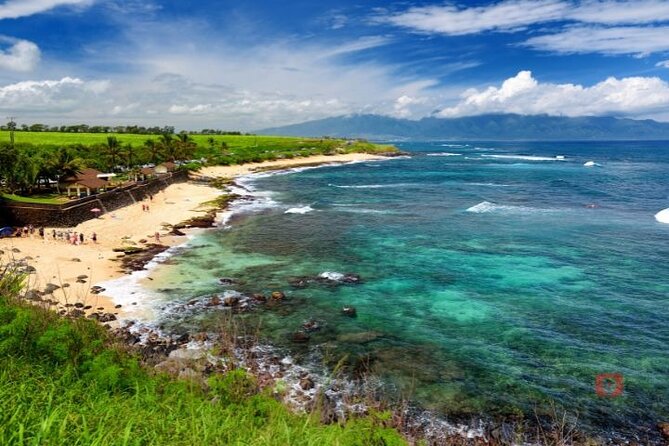
The audio route gives South Maui enough attention for a separate half-day. Kihei stretches for about six miles and includes several beach parks, shopping areas, restaurants, and condominium properties. It often receives less afternoon rain than other parts of the island, and its calm water suits an easy beach day.
Kamaole Beach Park I is one of three family-friendly beach areas along Kihei. You will find restrooms, showers, grassy picnic space, lifeguards, and snorkeling when conditions cooperate. Sunset is the main event, with views toward Molokini and Kahoolawe.
Polo Beach, in front of the Fairmont Kea Lani, is open to the public even though it fronts a resort. The rocky north end can be a place to look for green sea turtles while snorkeling. Give turtles plenty of room and never touch them.
Wailea Beach offers a polished coastal walk, resort views, sandy coves, showers, restrooms, and picnic areas. The beaches south of Wailea are also good places to look for turtles from the water. The app’s local tips are useful here because you can choose between a swim, a walk, snorkeling, or a sunset stop without committing to a formal schedule.
Farther south, La Perouse Bay feels more exposed and volcanic. The last active lava flow on Maui reshaped this coastline, and the Kings Trail crosses the lava fields. Wear solid footwear, protect yourself from the sun, and take extra care with snorkeling because the area is isolated.
Makena Beach, also called Big Beach, has a broad sandy strip and lifeguard service. The shore break can be forceful, so never turn your back on the ocean when entering or leaving. Little Beach, reached by a trail over the headland, is clothing-optional and has a more free-spirited atmosphere, particularly around Sunday evening drum circles and fire dancing.
West Maui beaches, whales, and old Lahaina
West Maui supplies a different set of stops. Papawai Scenic Lookout is especially useful from November through April, when humpback whales spend winter in Hawaiian waters. From this elevated point you might see blows, tail slaps, or breaches, though wildlife sightings are never guaranteed.
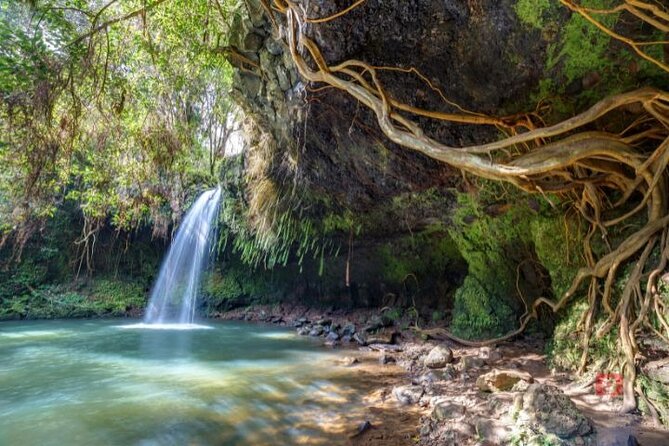
Ho’okipa is a better place to watch windsurfers than to swim. Strong winds and currents make the beach unsafe for casual swimming, but the shore can be a fine stop for a short break. Turtles sometimes rest at the far right end of the beach. There are bathrooms, showers, and picnic areas.
Honolua Bay is protected and known for snorkeling and diving, but conditions matter. The shoreline is rocky, and the marine conservation area includes neighboring Mokule’ia Bay. When the sea is calm, the water around the point can offer excellent fish and coral viewing. In rougher conditions, stay on shore and enjoy the cliffs.
Lahaina combines waterfront shops and restaurants with sites tied to Hawaii’s royal, trading, and whaling past. It is best explored on foot. The giant banyan tree and old buildings make this a natural place to pause rather than simply drive through.
Ka’anapali Beach offers several miles of sand, boardwalks, snorkeling, lifeguards, showers, and picnic areas. The nightly cliff ceremony at Black Rock is a popular evening tradition. The audio guide can point you toward the area, but you should allow time for parking, walking, and staying after sunset if you want to see the torches.
At Nakalele Blowhole, a short trail leads down through rocky ground. Keep well back from the opening and never turn your back on the sea. You can still see the blowhole and dramatic coastal cliffs from the upper parking area if the walk feels unsafe or uncomfortable.
Price, phone setup, and the real value
At $29.99 per group, this is one of the less expensive ways to add structure and context to a rental-car holiday. A group of four pays less than $8 each, and a larger family pays even less. You also avoid the fixed pace and per-person cost of an in-person excursion.
The strongest value comes from flexibility. You can pause for lunch, skip a crowded stop, return to a favorite beach, or split Hana and Haleakala across separate days. The purchase has no expiry and includes future updates, so a canceled trip does not automatically mean wasted money.
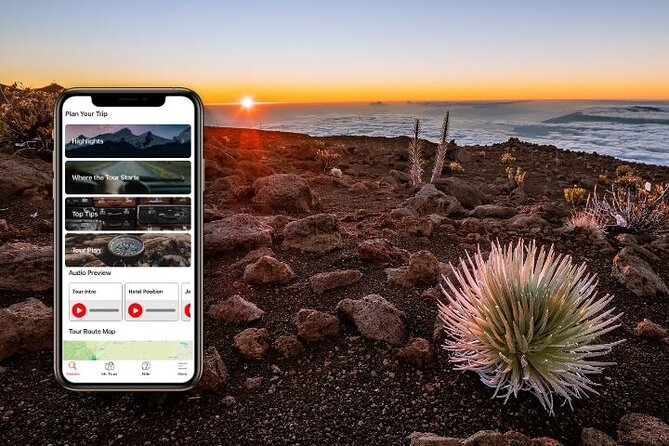
Download the GuideAlong app and the Maui tour before driving. You will receive instructions by email and text, then redeem the voucher using an Apple or Google account. Open the app, find the tour under My Tours, and save it over Wi-Fi or cellular data.
Once downloaded, it works without internet or cell coverage. Bring a USB car charger and arrange easy audio connectivity. GPS usually handles the automatic prompts well, but phone heat can become an issue during long drives. One practical solution is to turn off the screen while listening and give the phone a break near the car’s air-conditioning when needed.
The app can work alongside Waze or another navigation tool, though full navigation integration with Apple CarPlay is still being developed. If the audio stops after a pause, reopen My Tours and select Maui again. GPS should resume the commentary based on your location.
The product is offered in English only. Most people can participate, but the experience requires a driver, a phone, a rental car, and enough attention to use roads and stops safely. Do not operate the app while driving.
Who should book this Maui driving tour?
I would choose this for independent visitors who want background stories and route help without joining a bus. It suits families, couples, and groups sharing a rental car, especially people who dislike being rushed.
It is also a smart backup for a flexible itinerary. You can use it for a short Kihei outing, a Haleakala morning, or a full Road to Hana day. The guide is less suitable if you want a live guide who can answer questions, change plans instantly, or manage parking and reservations for you.
The rating is 4.5 from 31 ratings, with 90 percent recommending it. The praise centers on clear narration, useful history, automatic timing, offline performance, and money saved. The weak point is technical access: at least one booking failed during the download process, and the app requires iOS 14 or later or Android 9 or later.
Should you book it?
Book it if you are renting a car and want Maui’s roads to come with context, directions, and stop ideas. At $29.99 for the whole vehicle, the cost is modest, and the no-expiry policy gives you room to change your plans.
Skip it if you prefer complete silence, dislike phone setup, or expect a human guide to handle every detail. For most self-directed visitors, though, it is a practical companion, especially on the Road to Hana and the climb to Haleakala. Download it early, pack a charger, reserve Wai’anapanapa and Haleakala sunrise separately, and let your available time decide how much of Maui you actually see.
FAQ
How much does the Maui self-guided audio tour cost?
The price is $29.99 per group of up to eight people. One purchase covers everyone in the vehicle.
How long does the tour take?
The suggested use is approximately 8 to 16 hours. You can also split the routes across multiple days because the tour has no expiry.
Does the tour work without cell service?
Yes. You must download the app and Maui tour before driving. After that, the audio commentary works offline using your phone’s GPS.
Does the tour include national park admission?
No. National park passes and entrance fees for Haleakala National Park are not included.
Do I need reservations for any stops?
Yes. Wai’anapanapa State Park requires reservations for entry. A reservation is also required to visit Haleakala at sunrise. Other daytime Haleakala visits do not require a sunrise reservation.
Is the audio tour available in languages other than English?
No. The supplied information lists English as the available language.
Can I cancel for a full refund?
Yes, if you cancel at least 24 hours before the experience start time. Cancellations within 24 hours are not refunded, and changes within that period are not accepted.
Just added around Maui
- Lahaina: Group Surf Lessons for Beginners★ 5.0 · 3 reviews
- Midmorning Whale Watch from Lahaina Harbor★ 3.5 · 3 reviews
- Clear Kayak Sunset and Glow Tour in Maui★ 3.5 · 3 reviews
- Professional Photographer in Maui★ 4.5 · 3 reviews
- The Ultimate Road to Hana Slingshot Adventure from Kihei Maui★ 5.0 · 3 reviews
- Private Airport Arrivals Rides to Hotel★ 5.0 · 3 reviews
- Brewery and Beach Cruise in a Vintage VW Bus★ 3.5 · 3 reviews
- Lahaina: Private Sunset Sailing Trip & West Maui Mountains★ 5.0 · 3 reviews
Audio Tours, compared.
Shaka Guide Maui “Classic” Road to Hana Audio Driving Tour
Read our review →
Maui Adventure Bundle: 6 Epic Audio Driving Tours, Including Road to Hana
Read our review →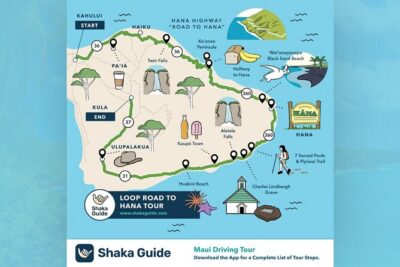


Browse the lists this tour appears in