
Reviewed · MAUI SURF LESSONS
Surf with ALOHA SURF SCHOOL
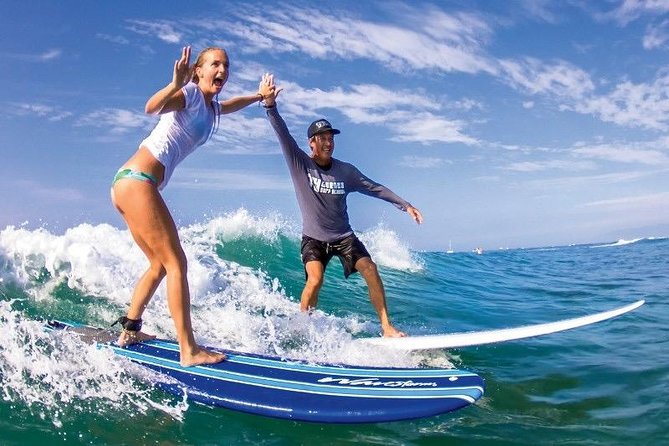
The best part of this Maui lesson is that you get into the water quickly at Kalama Park, a gentle beginner spot where first-time surfers have a real shot at standing before the session ends. Instructors such as Sean, Chris, Donald, Jesse, and Jayden focus on clear coaching, patience, and safety rather than showing off.
I like two things here. First, the small-group format gives you more direct help than a crowded beach class. Second, the school supplies the main gear, including a surfboard, rash guard, booties, and protective footwear, so you do not need to pack a garage full of equipment. The main catch is that surfing is hard physical work, and the shallow water can be rocky.
In This Review
- Key points to know before you book
- Starting at Kalama Park in Kihei
- Learning the basics before you paddle out
- Walking from the park to the surf area
- What the water is like for a beginner
- The two-hour push to your first wave
- The instructors make the difference
- What is included for $120
- Who should book this Maui surf lesson
- Booking, weather, and useful planning tips
- Should you book Aloha Surf School?
- FAQ
- Where does the surf lesson begin?
- Where does the activity end?
- How long is the surf lesson?
- What equipment is included?
- How many people can join the group?
- What happens if bad weather cancels the lesson?
Key points to know before you book
- Kalama Park is built for first-timers: The gentle surf and shallow water make this a sensible place to learn the basics.
- You receive the main equipment: A board, rash guard, booties, and protective footwear are included.
- The lesson lasts about two hours: That is enough time for instruction, practice, and repeated attempts at catching waves.
- The instructors are the main strength: Sean, Chris, Donald, Jesse, and Jayden are praised for calm, clear, friendly coaching.
- The group can include up to 15 people: It is described as small-group instruction, but the maximum is not a private lesson.
- Bring extra sun protection: A cap with UV protection, secured glasses, water, and possibly water shoes can make the session easier.
Starting at Kalama Park in Kihei
You meet at Kalama Park, at 1900 S Kihei Road in Kihei. The activity begins and ends here, which keeps the arrangement simple. You do not need to figure out a separate beach drop-off or arrange a ride between the lesson and your car.
Kalama Park also gives friends or family a reasonable place to wait. The park has picnic space and nearby restaurants, so the non-surfers in your party have somewhere to spend the morning. Public transportation is nearby, and service animals are allowed.
The setting matters because a first surf lesson is not just about the waves. You are learning how to handle a board, read the instructor’s signals, get into position, and stay calm when the water pushes you around. A familiar park with basic facilities makes the day less stressful.
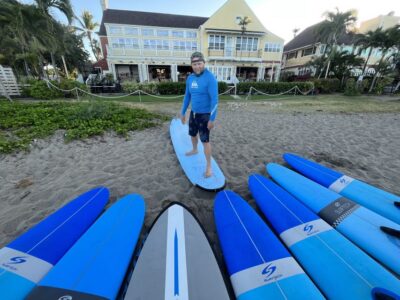
Your first few minutes are spent on safety and instruction. The instructor explains the basics of surfing, including how to use the board and what to do in the water. This is also the point when you receive the supplied gear and learn what to expect before walking to the surf area.
The lesson presents surfing as he’e nalu, the Hawaiian sport of wave riding. That cultural note is brief, but it gives the activity a local frame rather than treating the ocean as nothing more than a swimming pool with waves.
More surf lessons on Maui:
- Maui: Two Hour Beginner Group Surf Lesson in Kihei
★ 5.0 · 950 reviews - Outrageous Surf ScHool Lesson on Lahaina Side
★ 4.5 · 547 reviews - Group Surf Lesson at Kalama Beach in Kihei
★ 5.0 · 264 reviews
Learning the basics before you paddle out
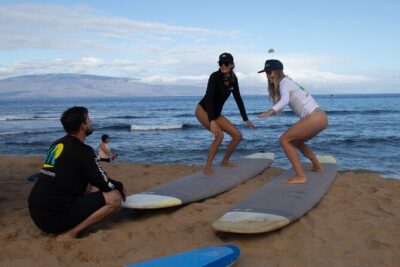
Expect the instruction to be practical. You will not simply be handed a board and told to try your luck. The certified instructor explains safety first, then covers the basic movements needed to get from lying on the board to standing.
That order is valuable for a beginner. Surfing can look easy from the beach, but timing, balance, and body position all matter. A clear explanation on land gives you something to remember once the board begins moving.
The instructors receive especially strong praise for being patient and easy to understand. Jesse is described as clear and encouraging with a first-time surfer. Donald is noted for helping a nervous beginner stand on the first wave. Sean is praised for attentive, friendly instruction, while Chris is described as coaching patiently for almost the full session.
Those details tell you what kind of lesson this is. The teaching style appears aimed at helping you feel comfortable, not at rushing you through a standard script. That is important if you are nervous, older, or unsure if surfing is for you.
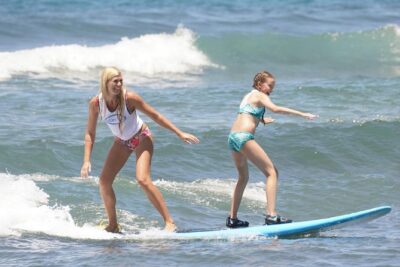
The school has also worked well for families. Teenagers aged 16 and 18 reportedly made surfing their favorite Maui activity, while a 51-year-old parent managed to get up on a wave or two. You should still be honest about your fitness, but this is not presented as an activity reserved for athletic young adults.
Walking from the park to the surf area
After the safety talk, you walk to the designated surf area. The provided information does not give a separate walking time, so you should allow a little flexibility rather than planning a tight appointment immediately afterward.
The walk is part of the transition from land lesson to water practice. You move from listening and watching to carrying a board and preparing to use it. Your instructor continues to guide the group as you get ready.
The lesson may be offered to a maximum of 15 people. That is a modest group size compared with a large beach class, though it does not guarantee one-on-one coaching. If you want constant personal attention, ask the operator about the group size for your date before booking.
The experience is offered in English. Confirmation arrives when you book, and the ticket is mobile, so you can keep the booking on your phone rather than printing paperwork.
What the water is like for a beginner
Kalama Beach Park is described as gentle and suitable for first-timers. That is the key reason this lesson works for people who have never surfed. Smaller, calmer waves give you more time to follow instructions and attempt a stand-up without facing an intimidating break.
Conditions can vary, though. One session had very small surf, yet still offered a pleasant way to spend time on the water and enjoy Maui’s scenery. Small waves may reduce the thrill, but they can also make the first lesson less frightening and more manageable.
The shallow area can be rocky. This is the most useful caution to take seriously. If you want to enter the water yourself, water shoes may be helpful. The supplied booties and protective footwear are part of the equipment package, but you should confirm exactly what is provided if foot protection is a major concern for you.
The shallow water also creates a viewing issue. A parent or companion may find it difficult to watch closely from shore because of the rocky bottom and water position. If you are bringing children, agree on where the adults will wait and keep your own expectations realistic about how clearly you will see every attempt.
Same island, a completely different kind of day:
- Maui Pineapple Farm Tour in Haliimaile
★ 5.0 · 2,855 reviews - Small-Group Road to Hana Adventure Tour with Pickup & Lunch
★ 5.0 · 2,637 reviews - Maui Eco-Raft Tour: Eye-Level Whale or Dolphin Watching – Lahaina
★ 5.0 · 2,482 reviews - Maui Snorkeling Adventure to Molokini and Turtle Town
★ 4.5 · 2,221 reviews
The two-hour push to your first wave
Once you are in the water, the lesson becomes active. You paddle, position the board, wait for a suitable wave, and try to stand. You will repeat this sequence many times, with the instructor offering corrections and encouragement.
Two hours is a useful length for a first lesson. You have enough time to make mistakes, adjust your technique, and try again. Some people may stand almost right away, while others need much of the session to find their balance.
Several instructors are praised for helping first-timers stand on their first wave. That is encouraging, but it should not be treated as a promise. Surfing depends on the day’s conditions, your balance, your comfort in the water, and how quickly your body learns the movements.
The most reliable payoff is not necessarily a perfect ride. You are paying for instruction, equipment, water time, and a structured introduction to surfing. If you stand once, you have a memorable result. If you spend the whole session learning to control the board, you have still gained a useful first step.
The activity is physically demanding. Paddling, pushing up, balancing, and repeatedly climbing back onto the board will tire you out. One family finished happily but was completely worn out. You should have a moderate level of physical fitness and be ready for sustained effort in the sun.
Take water and use extra sun protection. A cap with UV protection and glasses with a secure strap are sensible suggestions from the beach experience. Loose glasses can fall into the water, and an uncovered scalp can burn quickly during a two-hour session.
The instructors make the difference
A surf school can have a good beach and good boards, but the instructor determines how useful the lesson feels. Here, the strongest pattern is patient, friendly coaching.
Sean is described as attentive and professional during a one to two-hour lesson. He and Indie also helped a nervous surfer stay in the water for the full session. Chris is praised for coaching a family for nearly two hours, while Chris and Jayden helped returning beginners feel confident even on their second outing.
Donald and his team are singled out for welcoming a nervous newcomer. Jesse receives credit for clear explanations that helped a first-time surfer stand quickly. These are different instructors, but the common thread is calm support and practical feedback.
The school also has a photography and video touch in some sessions. Indie took photographs during one lesson, and Chris and Jayden prepared an edited video of rides at no extra charge. Do not assume that every departure includes the same photo or video service, but it is worth asking if having a record of your first wave matters to you.
The friendly approach suits people who might otherwise sit on the beach. One hesitant participant planned to watch rather than surf, then spent the whole lesson riding with a smile. That is a useful sign for couples and families in which one person is eager and another is uncertain.
What is included for $120
The price is $120 per person. For that fee, you receive roughly two hours of instruction, a surfboard, rash guard, booties, and protective footwear. The small-group setting and certified instruction add value because you are not trying to teach yourself from a beach rental board.
I consider the price reasonable if you want a guided introduction rather than a quick equipment rental. You are paying for someone to explain safety, choose a manageable approach, watch your form, and help you make repeated attempts. That support can save a great deal of frustration during a first session.
The value is strongest for complete beginners and nervous participants. If you already surf confidently, a basic two-hour lesson may offer less for your money. The description focuses on safety and fundamentals, not advanced coaching or a long guided surf outing.
The maximum group size is 15. Since the exact group size on your date is not given, the experience may feel more personal on a quieter departure than on a full one. If direct coaching is your top concern, contact Hawaiian Ocean Sports before reserving.
Who should book this Maui surf lesson
I would point beginners here first, especially couples, families, and older adults who want a supportive start. The gentle beach, patient teaching, and supplied gear remove several common barriers.
It also suits mixed groups. One person can be eager to surf while another feels nervous, and the instructors appear comfortable bringing hesitant people along at their own pace. Children and teens have done well, though the information provided does not state a minimum age, so check before booking for younger children.
You should be comfortable with moderate physical activity. If paddling, repeated push-ups, balancing, and time in the sun sound unpleasant, choose a less active Maui outing. The two-hour duration is not long on paper, but it can feel demanding once you are working in the water.
This may not be the best choice if you need completely smooth footing. The shallow water is rocky, and the beach is not described as a soft-bottom swimming area. Bring or request suitable foot protection, and listen closely to the safety briefing.
Booking, weather, and useful planning tips
The tour is often reserved about 17 days ahead. That does not mean you must book exactly that early, but it is a good reason to reserve ahead if your Maui dates are fixed. Surf lessons depend on suitable conditions and instructor availability.
You can cancel without penalty up to 24 hours before the start time for a full refund. Cancellations or changes made within 24 hours are not refunded or accepted. Cutoff times use Maui’s local time, so check the clock carefully if you are arranging plans from another time zone.
Poor weather can cancel the session. In that case, you are offered another date or a full refund. That policy is fair for an ocean activity, but leave some room in your Maui schedule if surfing is important to you.
Wear or bring strong sun protection, water, and glasses with a strap if you need corrective lenses. A UV cap can protect your scalp, and water shoes may help with the rocky shallows. Kalama Park has picnic space and restaurants nearby, making it easy to plan a meal or a relaxed break afterward.
Should you book Aloha Surf School?
Book this lesson if you want a friendly, beginner-focused introduction to surfing and value coaching more than luxury facilities. The best reasons are the gentle Kalama Park setting, the included equipment, and instructors such as Sean, Chris, Donald, Jesse, and Jayden, who are known for patient, clear help.
The main cautions are physical effort, strong sun, rocky shallow water, and a possible group of up to 15 people. At $120, the lesson earns its price when you use the full two hours and take advantage of the instruction rather than expecting a guaranteed perfect ride.
For a first Maui surf experience, I would choose it for an active family, a nervous beginner, or a couple looking for something more memorable than another beach morning. Bring water, protect your skin, accept that the ocean controls the schedule, and let the first successful stand count as a win.
FAQ
Where does the surf lesson begin?
The lesson begins at Kalama Park, 1900 S Kihei Road, Kihei, Hawaii 96753.
Where does the activity end?
The activity ends back at the Kalama Park meeting point.
How long is the surf lesson?
The experience lasts approximately two hours.
What equipment is included?
The lesson includes a surfboard, rash guard, booties, and protective footwear.
How many people can join the group?
The activity has a maximum of 15 participants.
What happens if bad weather cancels the lesson?
You will be offered a different date or a full refund if the experience is canceled because of poor weather.
Just added around Maui
- Lahaina: Group Surf Lessons for Beginners★ 5.0 · 3 reviews
- Midmorning Whale Watch from Lahaina Harbor★ 3.5 · 3 reviews
- Clear Kayak Sunset and Glow Tour in Maui★ 3.5 · 3 reviews
- Professional Photographer in Maui★ 4.5 · 3 reviews
- The Ultimate Road to Hana Slingshot Adventure from Kihei Maui★ 5.0 · 3 reviews
- Brewery and Beach Cruise in a Vintage VW Bus★ 3.5 · 3 reviews
- Private Airport Arrivals Rides to Hotel★ 5.0 · 3 reviews
- Lahaina: Private Sunset Sailing Trip & West Maui Mountains★ 5.0 · 3 reviews
Maui Surf Lessons, compared.


2 Hour Private Group Surf Lesson in Lahaina Maui
Read our review →Browse the lists this tour appears in